


Wastewater treatment is essential to protect the environment and health. It removes harmful bacteria, pollutants, and chemicals from wastewater before releasing it into the water bodies or for reuse. Water treatment is perhaps the process most severely affected in ensuring the cleanliness and safety of water for drinking, agricultural, industrial, and waste disposal purposes. This has resulted in several technologies coming up to satisfy the requirements of treating wastewater, all having different advantages and applicability. Such technologies include the SBR (Sequential Batch Reactor), MBR (Membrane Bioreactor), MBBR (Moving Bed Biofilm Reactor), and ASP (Activated Sludge Process) which are widely utilized, both by municipal and industrial wastewater treatment plants. In this blog post, we’ll discuss the Comparison of SBR, MBR, MBBR, and ASP Technologies in Wastewater Treatment.
Demand & Market Size of Wastewater Treatment
Globally, the wastewater treatment market size was estimated to be somewhere around USD 323.32 billion in 2023 and is expected to grow at a compound annual growth rate of 7.5% and reach approximately USD 617.81 billion by 2032.
In India, the wastewater treatment market was projected to be somewhere around USD 1.3 to 5.1 billion in 2022 and is expected to reach somewhere around USD 11 billion during the forecast period of 2029 to 2030.
Understanding different technologies in Waste Water Treatment:
SBR( Sequential Batch Reactor)
The SBR system has been popular due to its uncomplicated, flexible, and efficient functions in wastewater treatment by batch cycles. The SBR system works on the premise of filling a basin with wastewater and conducting aerobic treatment. Adroit provides two SBR technologies that can be effectively proven for providing wastewater management solutions to the Municipal or industries.

Adroit’s SBR Technologies:
- Batchflow SBR Technology
Batchflow SBR Technology of Adroit is an efficient treatment for both municipal and industrial wastewater. This optimizes the batch treatment process for biological treatment efficiency maximization. Where the flow conditions of wastewater treatment change, the Batchflow SBR easily adapts and becomes very flexible to operate under variable load regimes.
Key Features of Batchflow SBR Technology:
- Compliant with NGT discharge standards
- Fully Automated with PLC SCADA
- Operational Flexibility & Control
- Modular Expansion.

- Cycloxy Batchflow SBR Technology
Cycloxy Batchflow SBR Technology is different from a typical SBR, which employs a diffuser for aeration, Cycloxy Batchflow SBR utilises jet aspirators floating or fixed for aeration. This technology yields similar results to that of Batchflow SBR, but reduces operational cost in terms of power requirement of air blowers, maintenance & replacement costs of diffusers that have limited life, which get clogged in 1-2 years. Further, the efficiency reduces when the basin is emptied for cleaning. Cycloxy Batchflow SBR also has cost advantages compared to traditional SBR, requiring no air blower building and a lesser cost compared to air blower piping and diffuser. This unit is highly suited to applications with the highest treatment efficiency with minimized energy consumption and operation cost.
Key Features of Cycloxy Batchflow SBR Technology:
- Compliant with NGT discharge standards
- Fully Automated with PLC SCADA
- Easy & faster installation
- Lower capital & maintenance Cost
- Operational flexibility & control
- Offers modular expansion
Advantages of SBR Technology
- Efficient Sludge Management: There is precision in control in sludge settling and discharges.
- Strong Effluent Quality: The treated water is consistently within quality standards due to the batch process.
- Simple operations: Failures will be few because limited mechanical parts are present.
- Compact Design: The SBR units are very space-efficient, which makes them suitable for constrained sites.

MBR (Membrane Bioreactor)
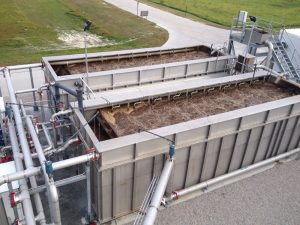
The Membrane Bioreactor (MBR) represents a combination of technologies, the biological treatment provided by microbiological activity, and the membrane separation using a membrane filtration unit (usually microfiltration or ultrafiltration) for separating treated water from biomass, ensuring a high-quality effluent for various applications, which may include reuse.
Key Features of MBR Technology
- Combination Biological Treatment and Filtration: MBR combines activated sludge with membrane filtration for excellent effluent quality.
- Compact Design: MBR units are smaller in requirement as compared to regular systems, thus being more suitable for urban areas or locations with restricted space.
- Higher Treatment Capacity: While MBR does highly efficient treatment of large water volumes, it can also withstand high concentrations of pollution.
- Effluent Quality: Membrane filtration ensures an effluent having very few suspended solids and pathogens.
MBBR (Moving Bed Biofilm Reactor):
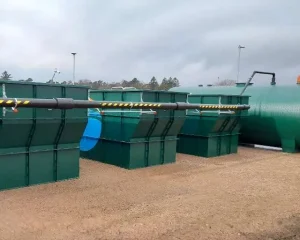
Moving Bed Biofilm Reactor (MBBR) is a biological treatment technology that enhances microbial growth by floating carriers (biofilms). The system utilizes the natural ability of microorganisms to degrade organic pollutants in wastewater as they attach to the media surface.
Key Features of MBBR Technology
- Biofilm Process: Biofilms are used for housing the microorganisms working in the breakdown of the pollutants.
- Modular and Scalable: MBBR systems are modular, such that scaling up or scaling down is achievable depending on treatment requirements.
- Compact Footprint: The system occupies less area than conventional activated sludge systems.
- Enhanced Performance: With more available surface area for microbe growth, the MBBR makes treatment efficiency better.
ASP (Activated Sludge Process):
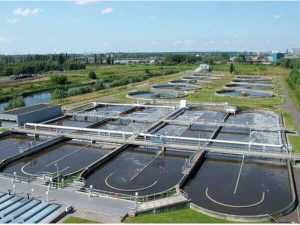
The ASP is one of the oldest methods still practiced for the treatment of wastewater. Here the microorganisms treat organic pollution in aeration tanks. The air is supplied to provide oxygen for the microbial population that degrades pollutants in the wastewater.
Technology Highlights of ASP
- Microbial Growth: The essence of ASP is the growth of the microorganisms in the aeration tank for the degradation of organic matter.
- Aeration and Sedimentation: The next operation is usually a settling tank that separates the sludge biomass from the treated water.
- Continuous Flow: ASP is a continuous flow, almost oppositely working to batch processes meant for large-scale practice in wastewater treatment.
- Simple and Reliable: An old method, this system has proven to be simple and reliable for decades in municipal and industrial wastewater treatment.
Comparison of SBR, MBR, MBBR, and ASP Technologies in Water Treatment
| S. no. | Waste Water Treatment Technologies | Effluent Quality | Flexibility | Cost | Complexity of work | Energy Efficiency |
| 1. | SBR | High Quality | High | Moderate | Moderate | Requires less amount of energy |
| 2. | MBR | High Quality | Low | High | High | Requires a high amount of energy |
| 3. | MBBR | Moderate Quality | Moderate | Moderate | Moderate | Requires a fair amount of energy |
| 4. | ASP | Low Quality | Low | Low | Moderate | Requires a significant amount of energy |
Reason- why SBR is the best choice for water treatment:
SBR stands up to all competing technologies for wastewater treatment due to effluent quality, flexibility, and energy costs. The following points summarize this view.
- Cost: SBR is cheaper than both MBR and MBBR, in design and application. It is a great solution for municipalities or industries looking for efficient and cost-effective installations.
- Quality: This is indeed a major factor behind the good performance of SBR systems. The treated water meets the high standards required by diverse industrial applications and is, thus, considered to be highly reliable.
- Flexibility: SBR installations can adapt to highly variable wastes, making it potentially a good option for industries that have variable wastewater loads.
- Energy efficiency: More energy efficient than ever with the advanced aeration systems developed within Adroit’s Cycloxy Batchflow SBR Technology.
How to Choose the Right Technology?
There are several tips that you should consider when choosing the right wastewater technology for your projects, which include:
- Thoroughly characterize your wastewater needs to understand its volume, flow rate and contaminant composition
- Research local and national regulatory requirements to ensure the system you choose will meet discharge limits and standards
- Take into account site conditions, implemented costs and space limitations. Conduct treatability studies or pilot tests to evaluate the performance of prospective technologies for your waste stream
- Select a technology that balances technical feasibility, economic feasibility and sustainability goals
What are the cost differences between SBR, MBR, MBBR and ASP?
MBR has high capital and operational costs, whereas SBR is the most cost-effective solution, while MBBR and ASP fall in the middle range.
| Treatment Technology | Capital Cost | Operational Cost | Maintenance & Energy Use | Typical Applications |
| ASP | Low (most economical to build) | Moderate to High (due to high energy for aeration) | Requires frequent sludge handling & skilled monitoring | Municipal wastewater, conventional sewage treatment |
| SBR | Moderate (higher than ASP) | Moderate (saves on footprint but needs automation) | Lower sludge production, moderate energy demand | Municipal & industrial wastewater with space constraints |
| MBBR | Moderate to High | Moderate (lower sludge handling than ASP) | Less operator attention, energy efficient aeration | Industrial effluent, retrofit of existing plants & space-limited sites |
| MBR | Highest (membranes increase capex) | High (membrane cleaning & replacement costs) | High energy use, requires skilled operation | Advanced municipal wastewater reuse, high quality effluent needs |
Final Thoughts:
To sum up, wastewater treatment technologies like SBR, MBR, MBBR, and ASP have some pros and cons. Out of the big group, the SBR stands out for cost efficiency, flexibility, and energy efficiency. It is, thus, the preferred technology in industries and municipalities that require a relatively longer-lasting treatment system at an efficient and low cost.
Adroit’s Batchflow SBR Technology and Cycloxy Batchflow SBR Technology are the latest and greatest in the brand-new energy-efficient output for today’s needs of wastewater treatment processes, achieving excellent results for less money. Further, you can get more interesting information on Adroit’s advanced SBR technologies and see how they can even benefit your water treatment projects by visiting Adroit India, the site for Adroit.
With Adroit’s SBR systems, you’re investing in a tried and tested technology that gives the best performance at little operational costs with smaller environmental footprints.
Frequently Asked Questions About Water Treatment Technologies
Question 1. Which process is more energy efficient in the long run?
Answer. MBBR is typically the most energy efficient in the long run due to lower aeration demand and reduced sludge handling.
Question 2. Which technology produces the highest quality treated water for reuse?
Answer. MBR (Membrane Bioreactor) produces the highest quality treated water for reuse with very low suspended solids.
Question 3. What factors should I consider before choosing a wastewater treatment system?
Answer. You should consider factors such as the volume and composition of your wastewater, regulatory compliance, site conditions, the system’s maintenance requirements & energy consumption, initial and ongoing costs and the availability of professional support.