


Water is important for both human life and industries. Regardless, growing industrial needs have led to great pollution in water structures, with dangerous essences from factories and power units polluting regional water systems. This industrial water pollution poses severe chances to ocean ecosystems, human health, and the general quality of water sources. There are efficacious techniques for treating and reusing industrial wastewater. This blog will explore Industrial Water Pollution: Effective Treatment and Reuse Methods.
Industrial Water Pollution: Effective Treatment and Reuse Methods –
Here we mentioned the causes, effective treatment, and reuse techniques for industrial water pollution –
Causes of Industrial Water Pollution
Industrial water pollution happens because dangerous essences like chemicals, heavy metals, plastics, and oils are released into water structures from industrial movements. Typical sources like –
Manufacturing Units:
Manufacturing units, particularly in the chemical, textile, food processing, and paper industries, discharge impurities like dyes, solvents, oils, and organic debris into rivers and lakes.
Mining Processes:
Removing minerals can form toxic runoff with heavy metals like mercury, lead, and realgar that pollute nearby waters.
Power Plants:
Structures that use coal, oil, or natural gas cause wastewater polluted with cooling agents, oils, and heavy metals.
Pharmaceuticals and Chemicals:
The pharmaceutical and chemical industries use different chemicals, and inappropriate dumping can remove materials from water systems.
Agriculture:
While not considered industrial, agriculture can lead to water pollution when fertilizers, pesticides, and herbicides wash into nearby water structures.
The effects of water pollution are severe, impacting ocean life, consuming water quality, and harming ecosystems. With the expansion of industrial activities worldwide, controlling industrial wastewater is a crucial environmental problem.
Impact of Industrial Water Pollution
The impacts of industrial water pollution can be Serious, these are –
Ecosystem Damage: Pollutants can damage ocean ecosystems, leading to biodiversity loss and disrupting the food chain. Polluted water probably kills fish and different organisms or induces reproductive issues.
Human Health: Drinking water with harmful essences like heavy metals and pesticides can lead to severe health problems like cancer and neurological diseases. Also, It contributes to waterborne disorders that affect millions across the World.
Economic Impacts: Industries based on clean water, like farming and tourism, can face economic defeats because of pollution. The expenses of treating polluted water and executing pollution management can also load both industries and governments.
Methods of Reusing Industrial Water –
Reusing industrial water is a tolerable method to reduce the requirement for freshwater and decrease the environmental effect of wastewater. Here are some methods for water reuse:
Direct Reuse –
This method involves treating wastewater to be used directly for industrial processes, cooling, or non potable domestic purposes like irrigation and toilet flushing. It’s often used in industries that use a lot of water, such as power plants, chemical plants, and paper mills.
Indirect Reuse –
In Indirect Reuse, treated industrial wastewater is freed into raw water bodies. There, it experiences genuine treatment before being taken out and reused. This is expected when industries are nearest water sources and can help from extra supply.
Water Recycling Systems –
Multiple industries are now using closed-loop water recycling methods, where water is treated and reused many times within the structure. This process effectively decreases water usage and makes sure that any waste is correctly treated before being reused or released.
Adroit | An Effective Treatment for Industrial Water Pollution –
Adroit is a committed team of engineers and experts dedicated to redefining the water industry with creative and resilient solutions. Our wisdom be found in developing and producing the paramount equipment for efficient water and wastewater treatment. With a complete collection of products and services, we fulfill the different water requirements of Industrial water pollution. We have a rich experience of more than 35 years, we carry ourselves on our rich history and relentless dedication to redefining water management.
Our Products & Technologies for Effective Treatment of Water Pollution in Industries –
Here we mentioned our range of products or technologies for effective treatment of wastewater and pollution of water in industries.
Batchflow SBR Technology –
Batchflow SBR technology is a major solution for the treatment of water pollution in industries. It is a cutting-edge solution developed for the aerobic biological treatment of wastewater and effluent. This fully automatic system has a perfectly installed process that blends aeration, settling, and decanting within a single treatment tank. Its creative design improves efficiency and efficacy in treating water, making it an advanced option for wastewater management.
Key Features:
- Compliant with NGT clearance norms
- Fully Automated with PLC SCADA
- Functional flexibility & management
- Presents modular development, etc.
Cycloxy Batchflow SBR Technology –
Cycloxy Batchflow SBR technology uses patented jet aspirator technology for aeration, greatly underestimating the requirement for orthodox diffusers, air blowers, and related accessories. This creative process not only keeps the same discharge parameters but also decreases funds expenses, lowers energy consumption, and decreases maintenance needs. As a result, it provides an efficient and affordable solution for wastewater treatment.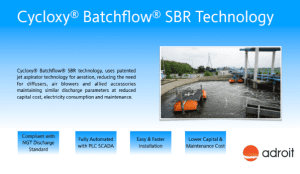
Operations –
- Air Induction
- Oxygen transfer
- Mixing
- Continuous Operation
Key Features –
- Decrease finances & Maintenance Expenses
- Operating flexibility & control
- Presents modular development
- Obedient with NGT discharge norms
- Fully automatic with PLC SCADA
- Easy & faster installation, etc.
GDISK –
Gdisk is a cutting-edge filtration system that uses an exceptional pile cloth media to effectively clear suspended solids (SS) and turbidity. This system is completely perfect for the final filtration of secondary treated wastewater, fulfilling both municipal and industrial application needs.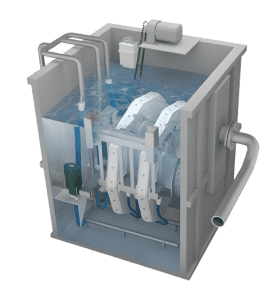
The GDisk Pile Cloth Disk Filter is universal and positively efficient, making it an outstanding option for both drinking water purification and wastewater treatment. Its excellent filtration abilities ensure top-quality output and compliance with environmental norms, delivering a visual solution for multiple stages of water treatment methods in industries.
Key Features:
- Tertiary Treatment in Sewage Treatment Plants and polishing of treated water for reuse.
- Effluent Water Reuse for Irrigation, Industrial, and other non-potable objectives.
- Industrial Wastewater Treatment.
Knife Gates –
Knife Gate Valves are simple, strong valves developed without a bonnet, and made as per MSS SP-81 norms for industrial application. They are utilized in industries like power generation, cement, paper, chemicals, and water treatment to manage solids, liquids, and mixtures. These gates can have metal or soft seats and can be integrated into different positions like vertical, horizontal, or inclined.
Screw Press –
The Screw Press is advanced equipment for extracting water from sludge. Unlike traditional methods like belt filter presses, it has a compact design that prevents clogging and operates fully automatically without the need for human supervision. This machine doesn’t require sedimentation or sludge thickening tanks, and its enclosed design improves the working environment on-site.
Other Important Treatments –
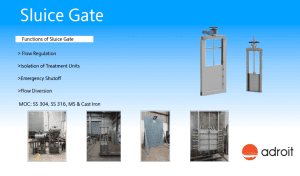
SLUICE GATE
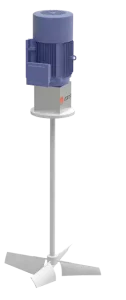
AGITATOR & FLASH MIXER
BELT CONVEYOR
SCREW CONVEYOR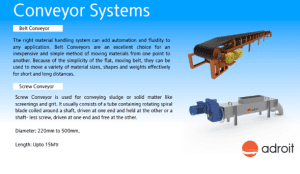
Contact Information –
Phone – +91 70248-48383
Email – [email protected]
Office Address – 01/101 Satguru Prime -11 Scheme – 140 Main Road, opposite Vaishnav Dham Mandir, Indore, Madhya Pradesh 452016.
Website – https://www.adroitwater.com/
Conclusion –
In conclusion, industrial water pollution causes severe difficulties to the environment and human health. Regardless, effective treatment and reuse methods deliver tolerable solutions. Technologies like Batchflow SBR and Gdisk filtration systems allow industries to dodge their environmental effect and comply with laws. With more than 35 years of experience, Adroit is dedicated to designing creative water treatment solutions for a cleaner, more endurable future.
FAQS for Industrial Water Pollution: Effective Treatment and Reuse Methods –
Q.1 What are the major reasons for industrial water pollution?
Ans. The major reasons are discharges from manufacturing plants, mining, power plants, pharmaceutical and chemical units, and agricultural left off. Each of these causes contributes to water pollution in different manners.
Q.2 How can industrial water be reused after pollution?
Ans. Industrial water can be reused via different methods like direct reuse, where treated wastewater is used for industries, and indirect reuse, where treated wastewater is discharged into water structures for further natural treatment before being re-released.
Q.3 Why is it necessary to manage industrial water pollution?
Ans. Managing industrial water pollution is paramount to saving ecosystems, ensuring public health, and maintaining water quality. And, controlling pollution maintains clean water resources for future ages and keeps economic movement.