
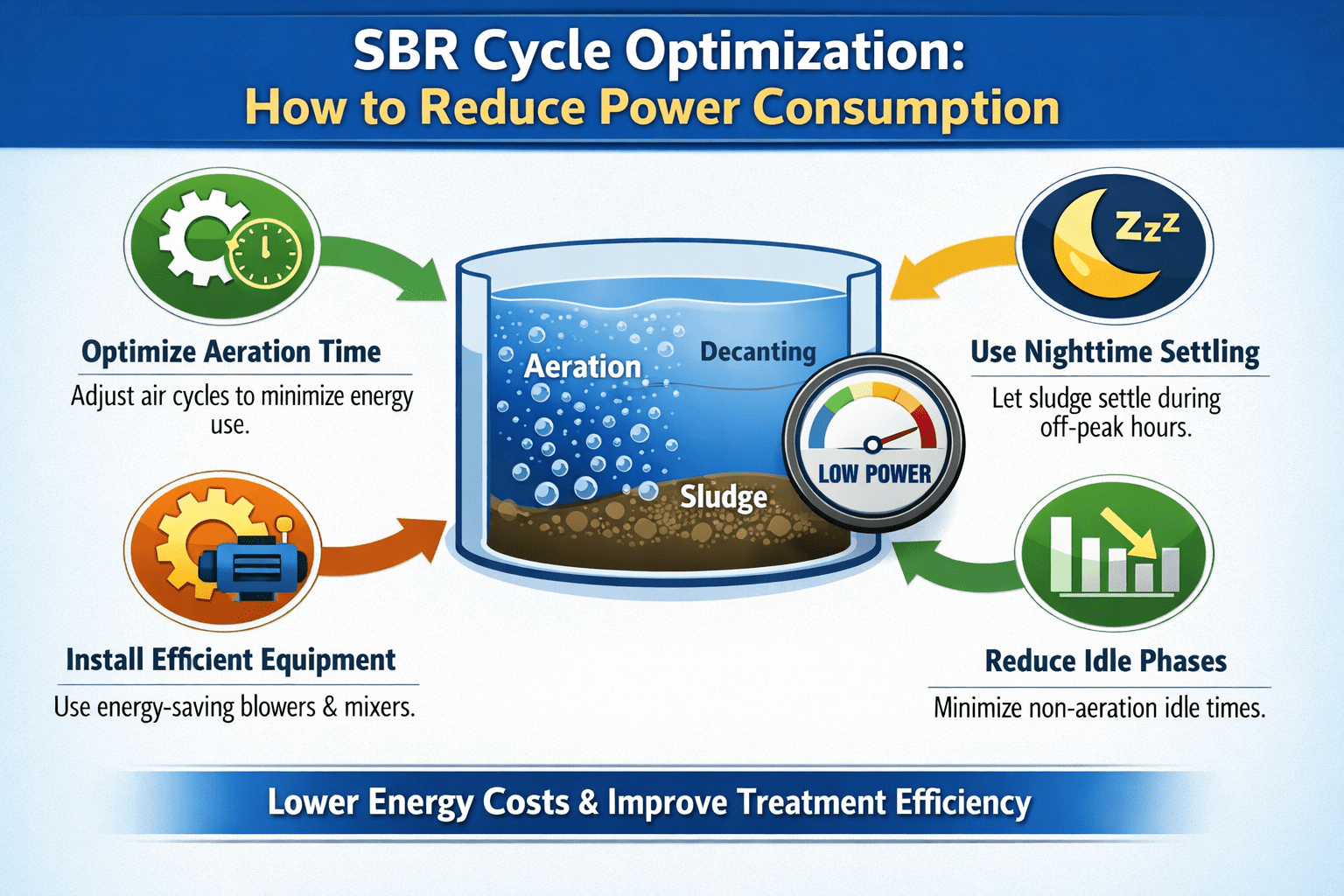

The water treatment of industrial establishments is one of the highest energy requirements of production facilities. According to the industry, wastewater treatment plants are responsible for about 3% to 4% of global electricity usage; they are considered very costly operation centres. Aeration (oxygen usage and transfer) alone uses 50% to 70% of all energy used in these systems.
With electricity prices increasing, strict regulations for discharging treated water into the environment, and greater pressure to be sustainable, many industries are now seeking opportunities to improve upon their treatment processes. The greatest challenge for all industries is to reduce their energy usage while still achieving the desired effluent quality.
The optimization of the Sequencing Batch Reactor (SBR) treatment cycle provides a game-changing solution. By optimizing the aeration rates, duration of cycles, and how the systems are controlled, industries can achieve significant energy savings while still complying with regulations. There are several leading solution providers (such as Adroit Water Technologies) that have developed their SBR optimization services into a science, providing an acceptable balance between energy and treatment performance.
What is SBR: A Detailed Overview:
Sequencing Batch Reactor (“SBR”) biological wastewater treatment operates in a batch mode and comprises a number of timed phases, treating wastewater in a single reactor. As the design of these systems eliminates the need for multiple tanks, SBRs are considered to be space-efficient and can accommodate most of the variations in flow within industrial wastewater streams.
Here is an explanation of the SBR cycle in five steps:
Fill Phase
Wastewater enters the SBR reactor and combines with existing biomass. The process design determines whether aeration will be added during this phase.
React (Aeration) Phase
This is where organic pollutants are biologically oxidized by microorganisms, and it is the most energy-intensive phase. Oxygen is supplied via blowers and diffusers, which increases the overall energy used.
Settle Phase
Aeration is stopped, and the biomass settles at the bottom of the reactor; clear water is separated from the sludge layer.
Decant Phase
Treated effluent is discharged from the top of the reactor without disturbing the settled sludge.
Idle Phase
A short period of downtime between cycles. This period is typically used for sludge removal or adjustments to the SBR system.
SBR systems operate based on influent characteristics, allowing the operator to adjust phases based on the variability of influent characteristics. Because SBR systems can accommodate a variety of influent characteristics, they can be used for wastewater remediation processes in industries that experience high variation in the volume of wastewater generated.
Why SBR Systems Consume High Power
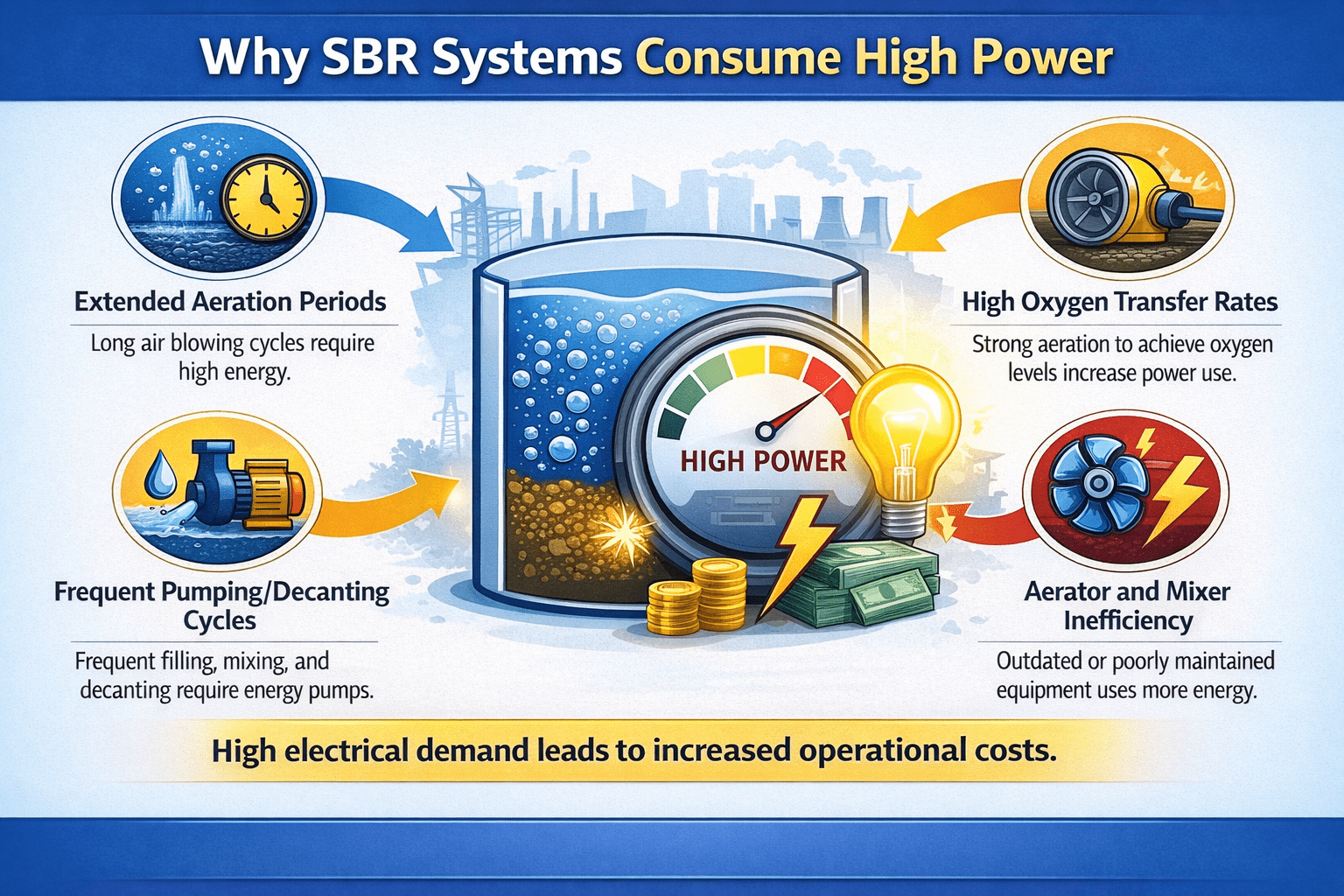
SBR systems are efficient; however, mismanagement of the systems will result in excessive energy consumption. The two main causes of high energy consumption are:
- Continuous Aeration Practices
Continuous aeration, as most facilities operate the blowers to maintain a constant airflow. This means a significant amount of energy is wasted every day without considering the actual aeration requirements based on the organic load on the SBR.
- Lack of Dissolved Oxygen (DO) Control
Improperly monitoring dissolved oxygen (DO) results in over-aeration by operators to err on the side of caution; therefore, this increases power consumption greatly.
- Inefficient Cycle Design
A fixed cycle duration that does not change with the wastewater can waste both time and energy.
- Outdated Equipment
Older blowers and bubble diffusers transfer oxygen less efficiently than newer designs; consequently, they use excessive energy to produce the same benefits.
- Manual Operations
Lacking automation results in delayed responses to process control and inefficient process control.
Resulting inefficiencies from these issues indicate that a structured approach for optimizing SBR cycle operation exists.
Best Practices for SBR Cycle Optimization:
Aeration is the largest source of energy use for an SBR, and proper optimization of aeration directly correlates with energy savings.
- Aeration should be intermittent versus continuous, providing oxygen in intervals relative to actual needs.
- Dissolved oxygen should be monitored, and the operation of the blower adjusted to maintain the proper level of dissolved oxygen.
- Dissolved oxygen levels should be maintained between 1.5-2.5 mg/L to provide for effluent treatment, as well as not consume energy to do so.
- This alone can create a reduction in energy use from 20 to 30%.
Optimizing the Cycle Time
Modern-day processes no longer have fixed timing; they utilize dynamic timing.
- Decreasing the aeration time when the load is low;
- Increasing the reaction time when loads are high.
- Reducing the idle time within a cycle maximizes throughput; and
- Energy is consumed only as needed, as controlled dynamically.
Smart automation and Digital Monitoring
Automation is a necessity for achieving continuous and efficient performance.
- Real-time monitoring utilizing PLC/SCADA systems and sensors measure parameters such as DO, pH, ORP, and MLSS;
- Artificial intelligence (AI) tools provide predictions for suspended solids loadings; and
- By reducing human input error, automation increases process accuracy, improving energy efficiency.
Optimizing Sludge Characteristic*
The characteristics of the sludge have a great impact on the efficiency of the treatment process.
- Proper MLSS levels in the tank are critical to ensure appropriate microorganisms can achieve maximum effectiveness.
- Preventing the bulking of sludge and increasing settling;
- Establishing regular sludge wasting will reduce cycle time and help maintain overall system balance.
- The sludge management plan should improve treatment efficiencies and contribute to less aeration energy requirements.
Upgrading the Equipment for Greater Energy Efficiency
Modern equipment is able to provide significant improvements to energy performance.
- Fine bubble diffusers can improve oxygen transfer efficiencies.
- Energy-efficient blowers can decrease energy consumption.
- Variable Frequency Drives (VFDs) allow blower speeds to be adjusted based on system demands and result in respective energy savings.
- Upgrading the equipment can provide energy reductions of 15-25%.
Ways Industry Can Decrease Power Usage
The following practical actions can be taken to improve efficiency:
- Install dissolved oxygen sensors for real-time control
- Use intermittent aeration rather than continuous aeration
- VFD retrofit of existing systems
- Regular maintenance of diffusers and pipes
- Conduct energy audits to find inefficiencies
These measures can achieve total energy savings of 20–40%.
How To Ensure Effluent Quality During Optimization
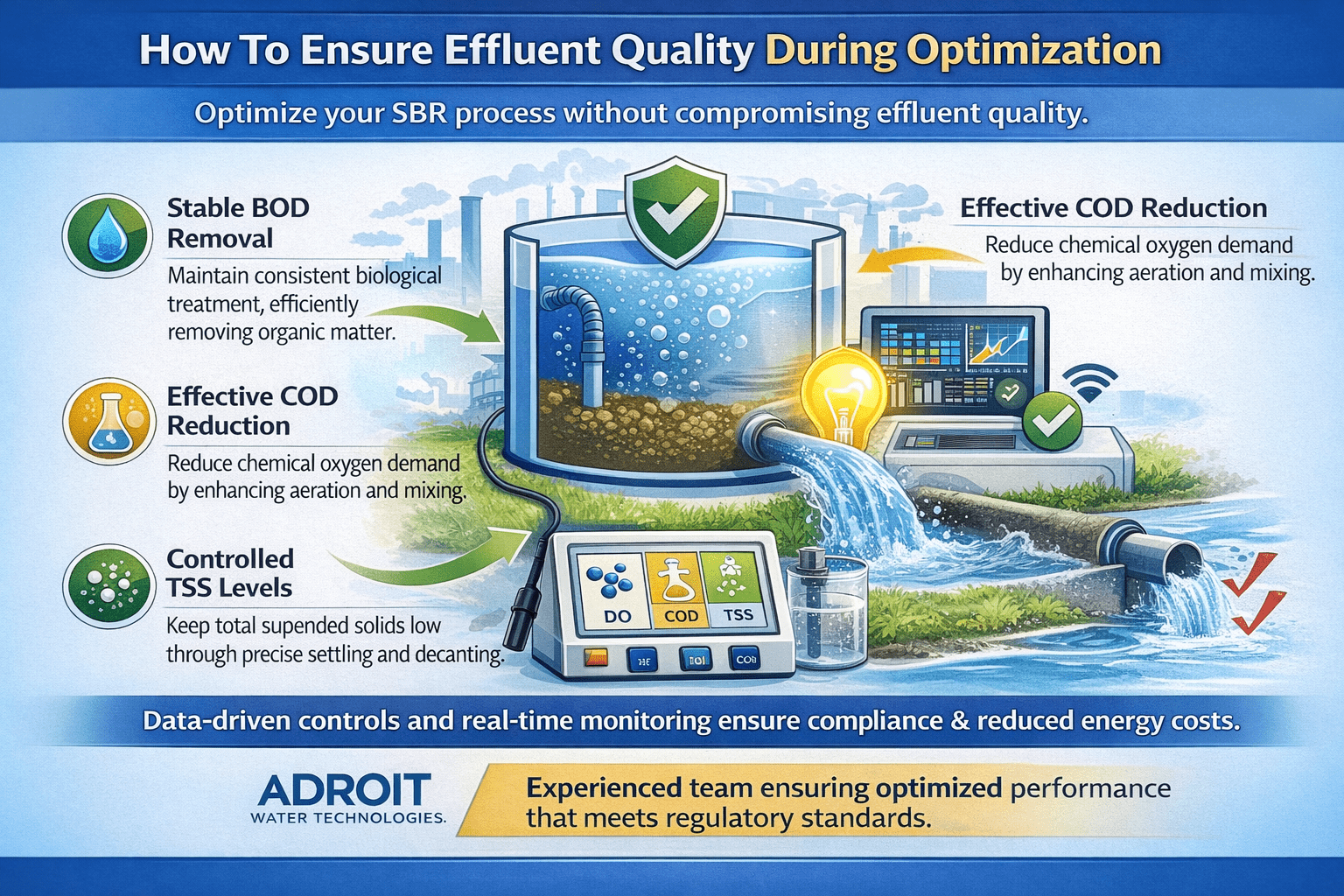
One of the biggest issues during optimization will be maintaining effluent quality. However, optimising is not simply about decreasing treatment but about increasing efficiency.
- A properly optimised SBR will provide:
- A stable removal of BOD
- An effective reduction of COD
- A controlled TSS level
With data-driven controls and real-time monitoring, industries have the ability to maintain compliance as well as reduce energy costs. Adroit Water Technologies has an experienced team that can ensure that the strategies used for optimising are in line with compliance standards.
The Benefits Of SBR Optimisation
There are both short and long-term advantages of optimising SBRs:
- Immediate energy savings on your utility bill
- Improved reliability and uptime of the system
- Better compliance with environmental regulations
- Reduced carbon footprint and increased sustainability
- Increased lifespan of mechanical equipment
Those are all excellent reasons to pursue optimising as a high return on investment
How Adroit Water Technologies Helps Industries
Industries can benefit from Adroit Water technologies when it comes to wastewater treatment solutions. Adroit focuses primarily on the optimization of sequential batch reactors (SBR) but also has the following capabilities:
- Customized SBR cycle design and performance tuning
- Advanced automation and control system integration
- Energy audits and optimization strategies
- Upgrading existing treatment plants
- Continual monitoring and maintenance support
Adroit uses its engineering skills combined with cutting-edge technological advances to produce quantifiable results.
Case Example: Achieving 30% Energy Savings
One case exemplifying a manufacturer partnering with Adroit for SBR optimization is a client who was struggling with high operating costs. Some of the challenges they faced included:
- High energy consumption for blowers
- Inconsistent effluent quality
- Manual operation of the treatment process
To address these challenges, Adroit implemented several solutions, which included:
- Installing DO (Dissolved Oxygen) Sensors
- Implementing intermittent aeration
- Integrating variable frequency drives (VFDs) into existing automation systems
As a result of these changes, the manufacturer realized a 30% reduction in energy use, maintained stable effluent quality within regulatory compliance, and improved overall operational efficiency. This is an example of how strategic SBR optimization can drastically impact the overall performance of a manufacturing plant.
Future Trends in SBR Optimization
Looking toward the future of SBR wastewater treatment, we are entering a new era of greater intelligence and sustainability. Emerging advancements such as:
- Artificial Intelligence (AI) driven optimization systems providing predictive control,
- Internet of Things (IoT) enabled sensors providing real-time monitoring,
- Development of energy-neutral SBR treatment plants
- Integration of solar/renewable energy into SBR treatment plants
These advancements will only continue to create further improved efficiencies and reduce reliance on conventional energy sources.
Frequently Asked Questions for SBR Cycle Optimization:
How does SBR optimization reduce energy consumption?
It can minimize energy-intensive processes while also maintaining the efficiency of treatment.
What is considered the best DO level for an SBR system?
Typically, a DO level of between 1.5 and 2.5 mg/l will provide adequate oxygen for biological treatment without excessive energy use.
Can reductions in energy use affect effluent quality?
No, if a proper optimization process is followed, utilizing real-time monitoring and/or automation systems.
Which industries benefit most by optimizing SBRs?
Pharmaceuticals, textiles, food processing, and chemical manufacturers, because of the high flow rates of wastewater associated with those industries, can achieve the highest returns from SBR optimization.
Why should I use Adroit Water Technologies for my SBR optimization program?
We are committed to creating customized, technology-based solutions that achieve energy savings while enabling companies to maintain compliance with regulatory requirements.
Conclusion
SBR cycle optimization is an important step in providing energy-efficient and sustainable wastewater treatment. Focusing on aeration control, automation, and process optimization allows industries to reduce power consumption significantly without reducing the quality of effluent discharge. Working with experienced companies such as Adroit Water Technologies provides a data-based and dependable approach to optimization. Companies will continue to seek out ways to be sustainable and cost-effective, and investing in SBR optimization will become vital for ongoing operational success.