
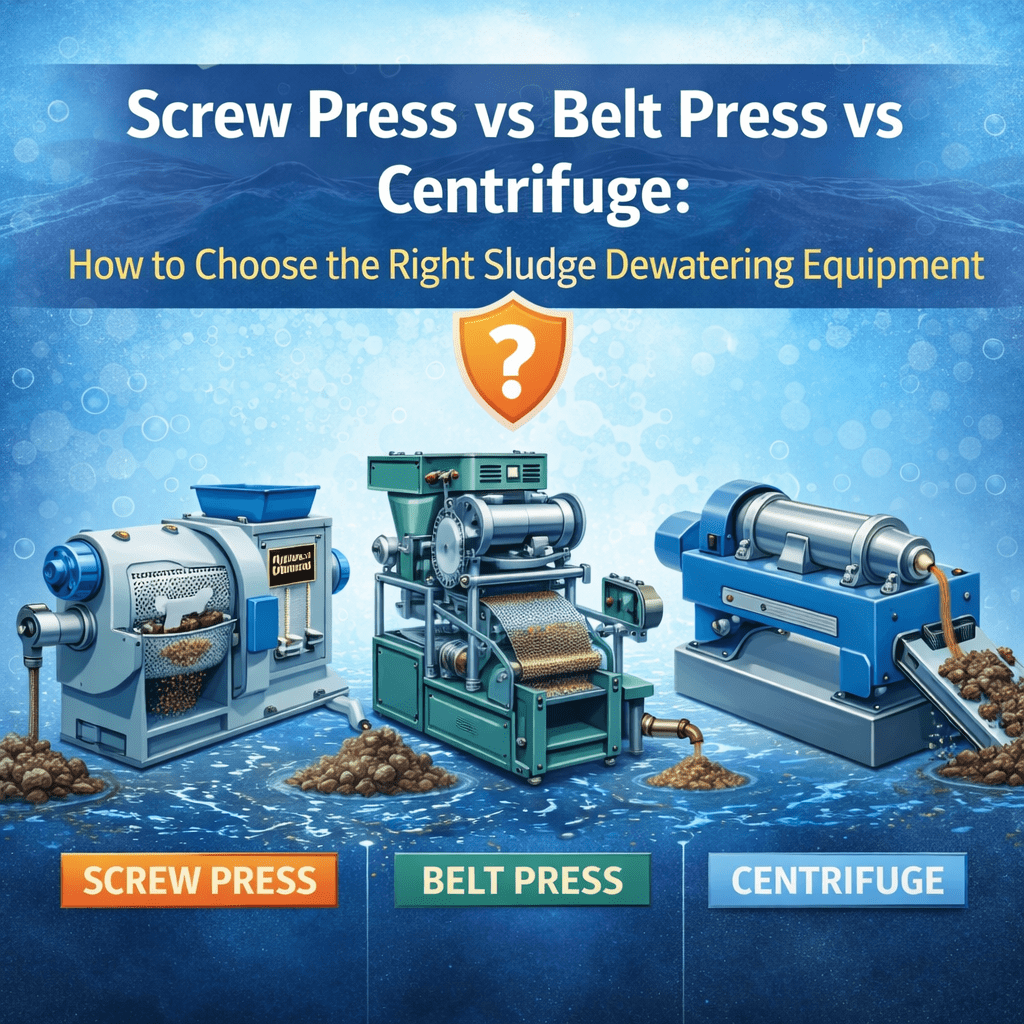

Greetings all, did you know that choosing the right sludge dewatering equipment is the most critical decision for every wastewater treatment plant? Wastewater treatment plants are getting pressure from regulatory authorities, high disposal costs, and the growing quantity of municipal and industrial sludge. That’s why the sludge management is no longer an option; it’s essential. Whether it’s a municipal sewerage treatment plant or municipal sewage, reducing wastewater sludge volume directly affects transportation, handling, and overall industrial operational expenses. If you didn’t know the difference between screw press, belt press or centrifuge: don’t worry, we will help you choose the right sludge dewatering equipment.
Waste water treatment plant operators and owners are continuously looking for a reliable and cost-effective waste water solution that helps to optimize their process. Which is why understanding the difference between screw press, belt press, and centrifuge is most important. This triple wastewater treatment product offers you unique advantages in the long term, and is helpful for reducing energy consumption, maintenance, or foot prints. Choosing the wrong one can lead to higher capital investment, operating costs, and reduced plant efficiency.
In this detailed guide, we will explore the detailed breakdown between screw press, belt press, and centrifuge systems that is helpful for making the right decision for your plant.
Understanding Sludge Dewatering in Wastewater Treatment
In wastewater treatment plants, the sludge dewatering is the most important step, because a large amount of water is removed from the sludge, and generates a significant amount of heat during the treatment process. When it is said in simple terms, it transforms liquid sludge into a form base that makes it easy to handle and transport.
It typically comes after primary and secondary treatment stages, mostly following the activated sludge process. It occurs where the biological sludge processes are produced, without proper dewatering, managing this sludge can be costly and challenging. Wastewater plants do sludge watering for reducing sludge disposal, lowering transportation and disposal costs. Overall, it is helpful for handling the overall plant efficiency while supporting environmental compliance.
KPIs are considered:
- It measures how much water is removed from water sludge
- Amount of chemicals required for transport conditioning
- It mainly impacts energy consumption
- It requires space for installation and operations
- Determine the ease of operation and labour requirements
Screw Press: Working Principle, Advantages & Limitations
What is a Screw Press?
The screw conveyor press machines use a screw to pressurize and separate solids from septic tanks. It is energy efficient, easy to operate, and effective for dewatering, which works slowly and works with fine material. Its cylindrical screen separates water from solids, which makes it low-maintenance and a perfect solution for wastewater treatment plants. Understanding and selecting the right sludge dewatering equipment helps you to make informed and cost-effective choices.
- Continuous mechanical dewatering system
- Uses a slow-moving screw inside a cylindrical screen
How It Works
- The screw press machine focuses on the flocculated sludge entering the unit
- Gradual pressure increase along the screw length
- Screw press helps to drain water easily through the screen
- Dewatered cake is discharged at the end
Key Advantages
- The screw press consumes less energy
- It produces low noise & vibration
- Comes with a compact footprint
- Suitable for low MLSS sludge
- Minimal operator intervention
Limitations
- This screw press machine makes a moderately dry cake
- This machine may not be ideal for very high solids content
Best For:
- Small to medium municipal plants
- STPs with space constraints
- Plants looking for energy efficiency
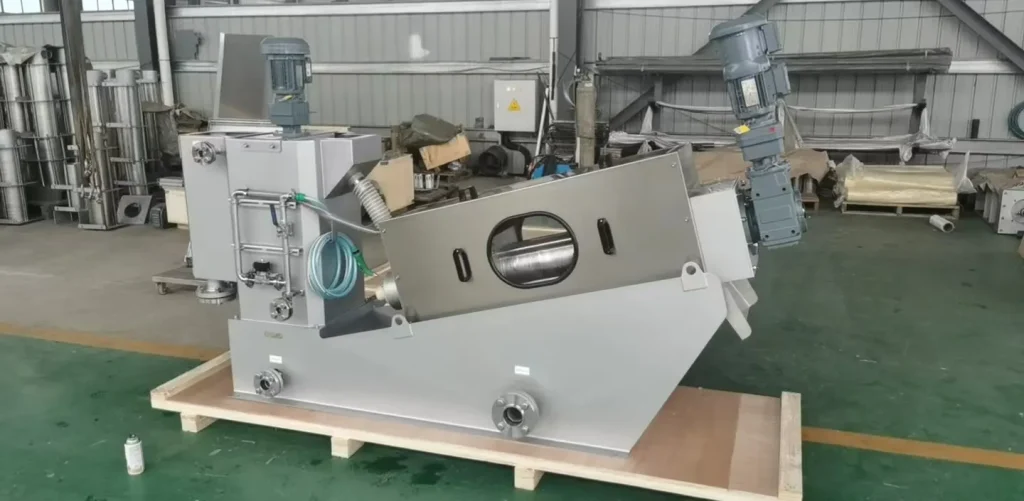
Belt Press: Working Principle, Advantages & Limitations
What is a Belt Press?
The belt press is used for dewatering machinery that is helpful for removing moisture from sludge or slurrying under continuous pressure without operations. This belt press is also known as a belt press filter, which is used in various industries and is helpful for applying pressure, squeezing, and removing water behind the solid material. Belt press is implemented for its efficiency, continuous operations, and lower energy consumption. That makes it the ideal solution for reducing wastage and improving the disposal of the recycling process.
- Used for sludge dewatering in multiple industries
- Operating with two belts and removing water with pressure
- Makes a dry solid for easy handling and disposal
- Supports continuous and large industrial operations
How It Works
- Firstly, sludge is conditioned with polymer and chemicals for dewatering
- Working with a moving belt for the gravity drainage zone
- Passes with the compression zone via rollers
- Water squeezed with solids is compact
- Cake discharge for easy handling and disposal
Key Advantages
- Cost-effective dewatering with highly effective moisture removal for large volumes
- Comes with Moderate CAPEX
- Make a drier solid by reducing wastewater volume, & Widely used technology
- Suitable for a wider range of industrial applications
Limitations
- It needs chemical conditioning with polymers, and increasing operational costs
- It requires regular maintenance and belt cleaning
- Setup and installation charges high, depending on the dewatering equipment
- Higher wash water consumption
Best For:
- Medium to large WWTPs
- Facilities with sufficient installation space
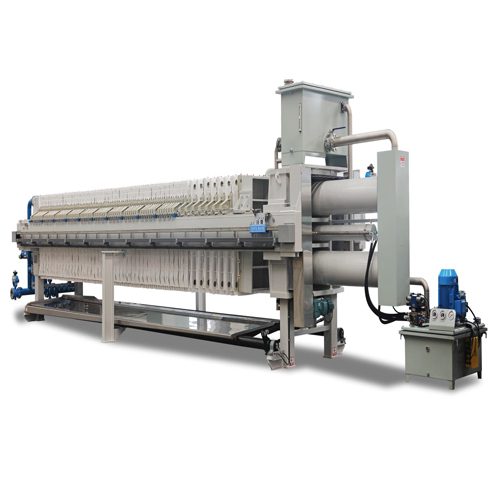
Centrifuge: Working Principle, Advantages & Limitations
What is a Centrifuge?
The centrifuge mechanical device comes with separate components of a mixture that is based on the water density and rapid rotation. A centrifuge works with highly spinning material that creates centrifugal force to push the heavier particles of produced water. It is widely used in various industries like pharmaceuticals, wastewater treatment plants, laboratories, and food processing units.
- High-speed rotating equipment separates a solid mixture based on density
- Use a high rotating speed to create centrifugal force
- Reduce heavier particles to stay near the centre
- Mostly used in pharmaceuticals, labs, and wastewater treatment plants
- Ensure the fast and efficient liquid separation
How It Works
- Sludge is fed into a rotating drum
- High-speed centrifugal force separates solids & liquids
- Solids & heavy particles are discharged continuously
- The lighter liquid remains in the centre
Key Advantages
- Fast processing with High cake dryness
- Handle the wide range of sludge materials with its Compact design
- Operates continuously and produces drier solids to various alternates
- Handles variable sludge types
- High throughput capacity & best for high volume industries
Limitations
- The centrifuge consumes higher energy due to rapid spinning
- Installation and purchase costs are high
- Needs regular maintenance to prevent wear and tear
- Not suitable for fibrous or sticky materials
- Generate noise with high vibration during operation
Best For:
- Large municipal plants
- Industrial wastewater
- Facilities requiring high dryness
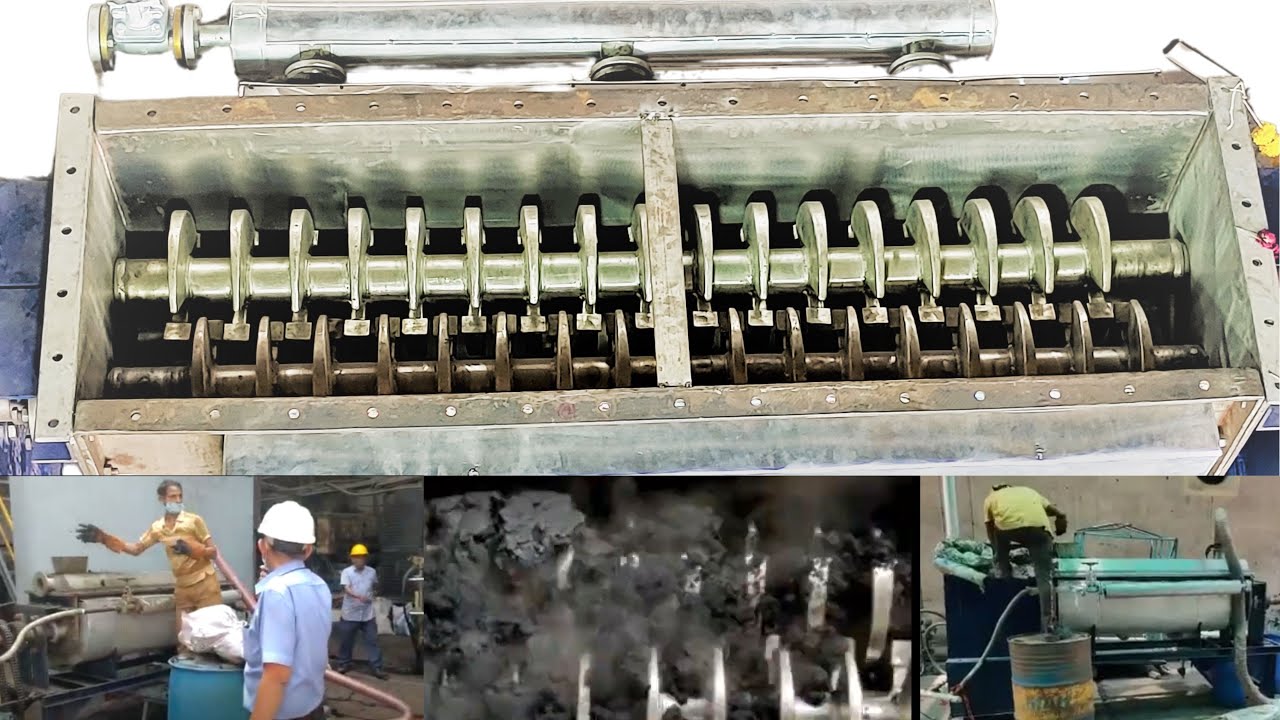
Comparison Table: Screw Press vs Belt Press vs Centrifuge
Choosing the right dewatering equipment and understanding the differences between the Screw Press, Belt Press, and Centrifuge is essential. These are best for smart industrial operations, moderate dewatering, rotating screw to squeeze and sludge with lower energy consumption. Selection of the system depends on various factors like sludge type, desired dryness, and energy-efficient requirements.
| Parameter | Screw Press | Belt Press | Centrifuge |
| Energy Consumption | Low | Medium | High |
| Footprint | Compact | Large | Compact |
| Cake Dryness | Moderate | Moderate | High |
| Maintenance | Low | Medium-High | High |
| Wash Water Use | Low | High | Low |
| Automation | High | Moderate | High |
| CAPEX | Medium | Low-Medium | High |
| Ideal Plant Size | Small-Medium | Medium-Large | Large |
How to Choose the Right Sludge Dewatering Equipment
Choosing the right sludge dewatering equipment depends on the industrial requirements and operational goals. You need to consider various things, such as types, characteristics, and the sludge, such as liquid form, solid, fibre, and the different machines that handle them differently. Then you need to evaluate the processing capacity on scale, to ensure that the equipment can handle your sludge and operational costs. Belt presses and screw presses are mostly cost and energy-efficient, or the centrifuges provide faster operations but take higher energy. When you consider these factors, you can select the most cost-effective and energy-efficient dewatering solution for your facility.
Evaluate Sludge Characteristics
- Primary vs secondary sludge
- Industrial vs municipal sludge
- Solids concentration
Consider Plant Capacity
- Small STP vs large municipal WWTP
- Daily sludge volume
Analyze OPEX vs CAPEX
- Energy cost
- Polymer consumption
- Maintenance costs
Space Availability
- Indoor vs outdoor installation
- Retrofitting constraints
Level of Automation Required
- Skilled manpower availability
- Remote monitoring needs
Regulatory Compliance
- Discharge standards
- Sludge disposal norms
Sludge Dewatering Systems: Equipment Types and Industrial Applications
The sludge dewatering system depends on the industry type and the type of material processed. There is various equipment, such as screw press, belt press, and centrifuge that offers you different types of industrial applications such as waste water treatment, food processing, and pharmaceuticals.
- Municipal wastewater treatment plants
- Food & beverage industry
- Textile industry
- Pharmaceutical industry
- Chemical processing plants
Why Choose Adroit for Sludge Dewatering Solutions?
Choosing a reliable industrial partner means getting long-term benefits. Adroit delivers you the reliable, high-performance sludge dewatering solutions that understand and help your industry-specific needs. We have years of experience and deliver cutting-edge technology. We ensure the moisture removal, operational costs, and minimize downtime. Our system works with easy operation, low maintenance, and delivers you consistent results.
- Engineering-driven design approach
- Customized solutions based on sludge analysis
- Energy-efficient & resilient systems
- End-to-end support: design, manufacturing, commissioning
- Alignment with the mission of sustainable water management
Conclusion
By the essence of the Screw Press vs Belt Press vs Centrifuge, choosing the right equipment can help you to align sludge type, plant size, and the various specific goals for ensuring optimal performance. Choosing the right sludge dewatering partner plays a much bigger role in the overall value.
FAQ’s about Screw Press vs Belt Press vs Centrifuge: How to Choose the Right Sludge Dewatering Equipment
Which sludge dewatering equipment gives the highest cake dryness?
All sludge dewatering equipment provides you with the cake dryness, but the Centrifuge is considered the best for high cake dryness and dewatering equipment.
Is the screw press better than a centrifuge for small plants?
Yes, the screw press belt is suitable for small wastewater plants, because it consumes less electricity with simple operations.
What is the energy consumption difference between the belt press and the centrifuge?
The press belt helps to consume less energy compared to centrifugal, which makes it a more energy-efficient choice for every industrial operation.
Which equipment requires the least maintenance?
The screw press belt requires the least maintenance compared to the belt press and centrifugal.
How do I choose sludge dewatering equipment for my STP?
For choosing the right sludge dewatering equipment, you need to ensure the sludge type, your plant size, dryness, and cost efficiency.
What factors affect sludge dewatering performance?
The dewatering equipment is affected by the sludge type, maintenance, solids, moisture level, and equipment levels.
Is a centrifuge suitable for industrial wastewater sludge?
The centrifuge is suitable for every type of industrial wastewater sludge, especially for high-density and high-capacity operations.