
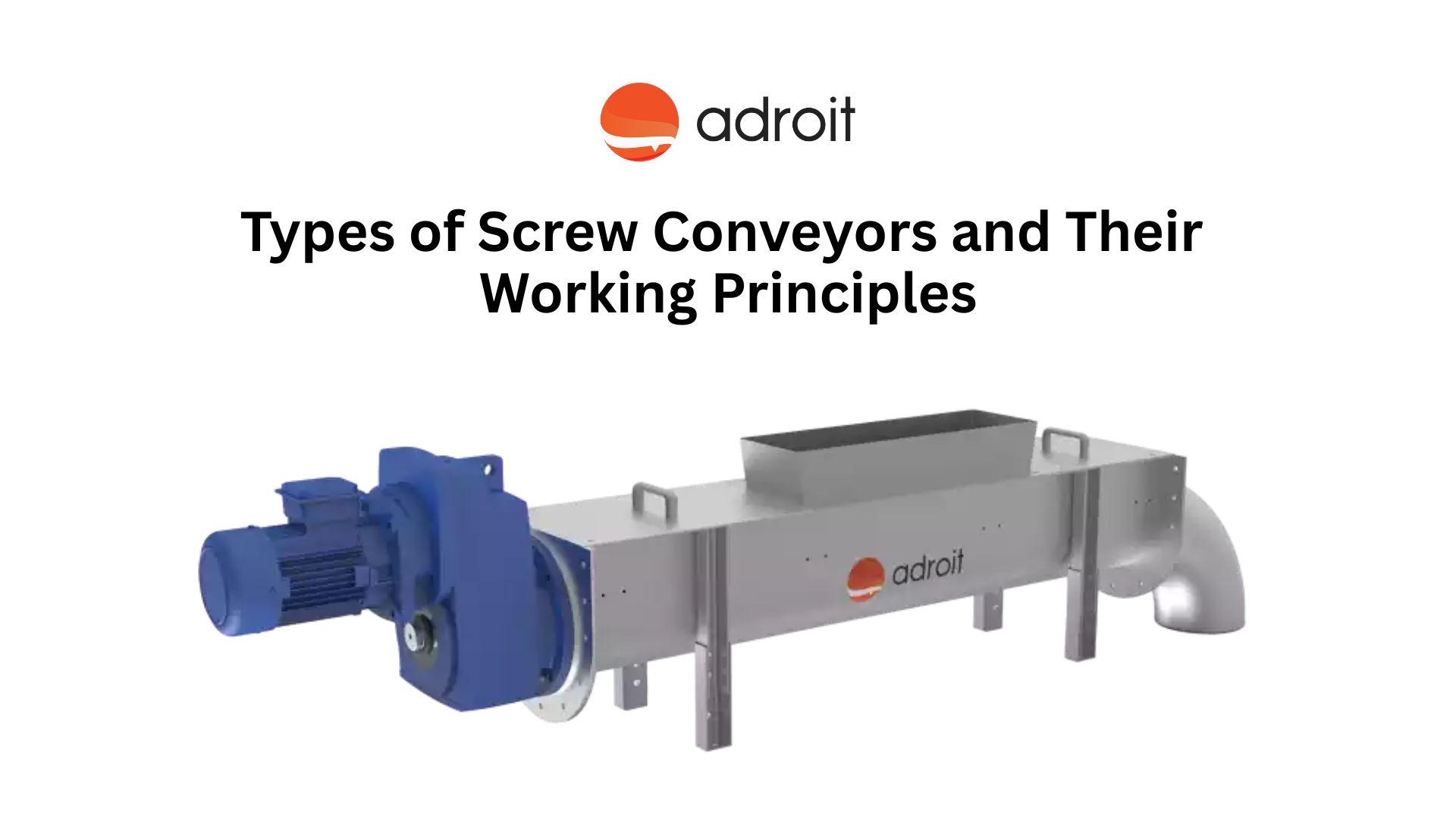

What is Screw Conevyors?
To understand a screw conveyor, visualize a huge screw inside a tube or trough. To move material forward this screw rotates much like a spoon pushing sand but much more effectively. A screw conveyor is built on a simple yet ingenious mechanism. The rotating screw sometimes referred to as an auger or flighting skillfully, which moves bulk materials from one end to the other either continuously or in segments and is driven by an electric motor. Important varieties of conveyors driven by screws.
Screw conveyors come in a range of designs, where each conveyors are appropriate for particular material qualities and uses. Let’s look at the different types of screw conveyors avaialable.
1. Horizontal Screw Conveyors:
It is a traditional method, when the screw is flat moves the material in a horizontal straight line, they are used in grain mills, factories, and processing facilities to transport bulk materials between production stages. Their ability to process a variety of materials, from heavier, more abrasive materials to lighter powder, is one of their key advantages. The typical range for trough filling or loading is between 15 and 45 percent, depending on the material’s flow properties
2. Inclined Screw Conveyors:
In this instance, the screw is angled to 45 degrees. Because the material becomes more difficult to move at greater angles the design of the conveyor is usually altered to reduce the pitch or the distance between screw flights to prevent material from sliding back. These are ideal for transporting materials from a ground hopper to a silo or higher levels. They have a lower capacity than horizontal conveyors and use more power as the angle increases. Special designs lead to a reduction in material fallback.
3 . Vertical Screw Conveyors:
This design raises materials vertically by making the screw stand nearly straight up. When materials are transferred to higher floors or silos this conserves space. Among the uses are grain elevators, feed mills, and any other facility where materials must go up straight. To ensure seamless operation and prevent overloading or excessive wear the screw must be fed at a steady regulated rate.
4. Shaftless Screw Conveyors:
The central shaft passes through the screw. They function best with materials that don’t clump or wrap around the shaft and are either dry and free-flowing or slightly sticky. In a shaftless system, the spiral is only maintained when the central shaft is removed. This design works best with materials that are sticky, stringy, or slippery and could clog a shafted conveyor, like fibrous products or sludge waste. They are also less complicated to maintain.
5. Double Shaft Screw Conveyors:
This mechanism has a pair of screws that rotate in opposite directions. This arrangement has the ability to stir or mix materials in addition to moving them. Double-shaft conveyors are the best option for handling very heavy loads or blending materials. The chemical industries that mix and process food use them extensively.
6. Trough Screw and Tubular Conveyors:
A tubular screw conveyor reduces spills and dust contamination because the screw is operated inside a completely enclosed tube. Handling hazardous materials or fine powders is best done with these. A U-shaped trough with a detachable cover is frequently used to hold the screw. For bulk materials that are not hazardous, this design is widely used because it is simple to maintain and inspect.
Working Prinicple of Screw Conveyors: How Do Screw Conveyors Transfer Material?
In general a screw conveyor pushes material along a trough or tube using the forward force generated by the screws (augers) rotation. Because the material is trapped between the casing and the flights (the helical blades), it advances with each turn rather than simply spinning in place.
- A conveyor’s inlet, typically a hopper, where bulk material enters the system. The screw is rotated by an electric motor contained within the casing.
- Material Movement: Along the conveyors length, the material is forced forward as the screw rotates. Pitch and screw design have an impact on how quickly and efficiently the materials move.
- Material Exits: At the other end (or at discharge points along the route), the material departs for the subsequent processing step.
Important Note: The quantity and rate of material movement are determined by the screws pitch rotational speed and angle of inclination. Clogging can be avoided by using shaftless designs with sticky or viscous materials. You can mix or blend using double-shaft or specially made flights.
Industrial Applications of Scew Conveyors.
- Transportation of feed or grain fertilizer is a component of agriculture.
- In food processing, you work with materials like flour, sugar, and other substances.
- Transporting sludge or dewatered solids is one way to treat wastewater.
- Mining and mineral transportation involve the transportation of crushed ore, gravel, sand, and other materials.
In construction, mixers are filled with aggregates or cement. Wherever bulk materials need to be transported effectively, they are indispensable due to their dependability, versatility, and comparatively low maintenance requirements.
How screw Conveyors are useful?
The reason so many industries love screw conveyors is their versatility in handling liquids semi-solids granules and powders.
- Transport Enclosed: Dust and contamination are kept out by tubular designs.
- Customizable: This can be applied to practically any surface or material.
- Simple to Maintain: Cleaning is facilitated, and problems are reduced.
Frequently Asked Questions about Types of Screw Conveyors and Their Working Principles
Question 1: What materials are suitable for it?
Answer – In general, dry, freely flowing materials are a good fit for a shafted conveyor. Grain free-flowing powders sticky pastes sludges and even some liquids can all be transported using screw conveyors. Choosing the correct design for the material you are using is crucial.
Question 2:What distinguishes shafted conveyors from shaftless ones?
Answer – Shaft conveyors are well-suited for long-distance conveying and used to support the screw flight. Whereas Shaftless designs prevent clogging with sticky or viscous stringy materials and facilitate cleaning.
Question 3:How far can an inclined screw conveyor extend?
Answer – Usually, inclined screw conveyor can be extended upto 6 to 20 meters (20-65 feet). The length of inclined screw conveyor are short due to gravity and material slippage. If the inclination is more than 20 degrees, then it may affect the flow of material.
Question 4: What are some ways to avoid clogging or sticking materials?
Answer – For sticky materials, use a shaftless design and make sure the conveyor is the proper size and pitch. Proper maintenance also requires routine cleaning and maintenance. There are other ways too for avoiding clogging or sticking materials, including using drain strainers, mindful disposal, hot water flushes, enzyme cleaners, and proper garbage disposal.