
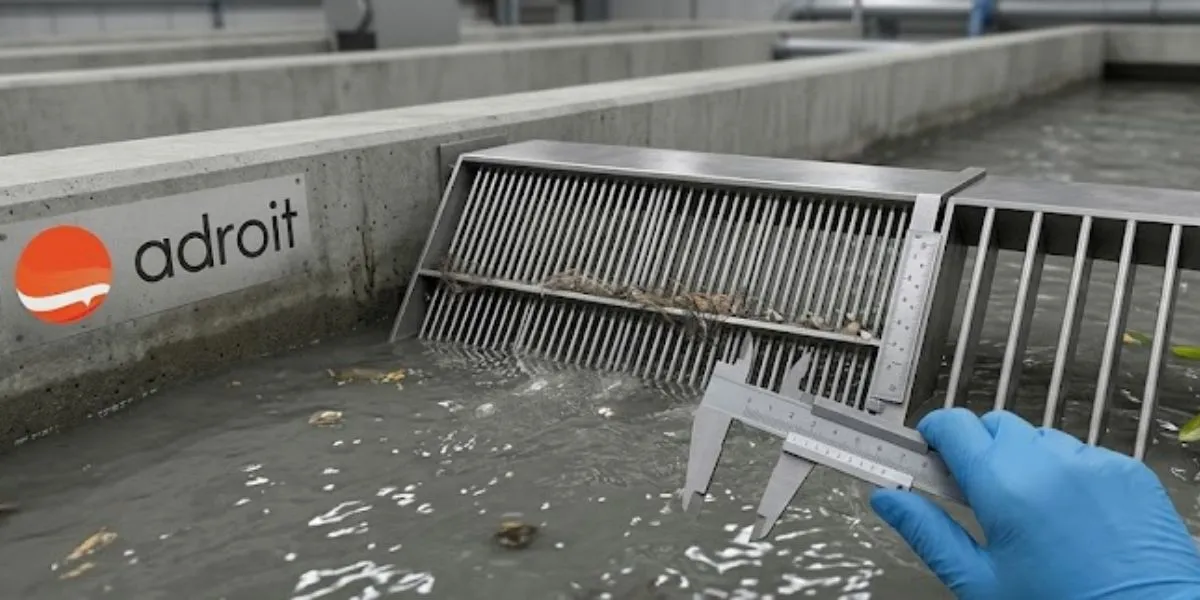

Bar Screen Spacing is the first component in any wastewater treatment process and relies on the spacing of the bars themselves determining the effectiveness of the bar screen system. Proper spacing allows the removal of unwanted solids, the protection of equipment and provides for consistent operation of the entire treatment plant. Without guidance, selecting an appropriate spacing between bars in a bar screen system can result in much confusion. The purpose of this blog is to simplify bar screen spacing and provide guidance for selecting the bar screen spacing that matches the application for each type of wastewater application.
What is Bar Screen Spacing?
Bar Screen Spacing consists of the open distance between bars of the bar screen that make up the screening system. This spacing ultimately determines the size of the solids that will pass and become removed through or retained in the preliminary treatment process.
Bar Screens can be classified as follows:
- Coarse Screens: 25 mm to 100 mm
- Medium Screens: 10 mm to 25 mm
- Fine Screens: 1 mm to 10 mm
Bar Screen Spacing will directly affect the following:
- Debris Removal
- Hydraulic Characteristics
- Headloss from Bar Screen to Downstream Waters
Fine Screens can remove 85% to 95% of suspended solids from the wastewater, while Coarse Screens will remove 60% to 70% of the oversized debris from the wastewater.
Why Bar Screen Spacing is Critical
Selecting the appropriate spacing will ensure that:
- Mechanical and membrane downstream equipment will be protected
- Wear and tear on equipment is minimized
- The efficiency of biological treatment processes is increased
- Operational costs are reduced
By contrast, improper spacing may reduce plant efficiency by as much as 30% and substantially increase downtime.
Key Factors to Consider When Selecting Bar Spacing
1. Type of Wastewater
The first and foremost consideration should be the type of incoming wastewater.
- Municipal wastewater has many types of pollutants including plastic materials, rags, and organic materials.
- Industrial wastewater includes fiber materials, grease, chemicals, and/or heavy solids.
- Industrial streams contain 2 to 5 times the amount of solids as municipal wastewater requiring the use of finer or specialized screen solutions.
2. Flow Rate and Hydraulic Load
- Flow Rate and Hydraulic Load
It is essential to design with both average and peak flow conditions in mind.
- Narrower spacing creates greater resistance to flow.
- During periods of peak flow, improper spacing can create headloss in excess of 30%.
Designers must ensure that the bar screen is capable of handling hydraulic fluctuations without overflow or bypass of any solids.
3. Size and Type of Solids
Understanding the particle size distribution of solids is needed to help determine proper spacing.
- Larger debris = coarse screens
- Fibrous material = medium to fine screens
- Suspended solids = fine screens
Improper sizing of solids will either allow harmful materials to pass through or create excessive clogging.
4. Downstream Equipment Protection
Bar screens can protect critical equipment components such as:
- Pumps
- Aerators
- Membrane Filter
Pump failure due to improper spacing can be reduced by up to 50%, increasing the reliability of a plant.
5. Headloss Considerations
- Headloss can also be defined as the loss of energy (or head pressure) from the time the wastewater enters the screen until it leaves.
- Smaller spacing creates a greater amount of headloss.
- Greater spacing creates less resistive energy or headloss but reduces filtration performance.
- There is a point where there is an acceptable balance between the proper amount of headloss for the efficient operation of the bar screen and preventing excessive loading of the downstream components.
6. Maintenance and Cleaning Requirements
- Frequency of maintenance is inversely proportional to the spacing.
- Fine Bar Screens require 2–3 times as many cleaning cycles.
- Bar Screens with a manual cleaning method are typically not ideal for small spacing.
- The use of more automated mechanical cleaning systems is preferred when maintaining the continuous operation of the bar screen.
- Proper selection of bar screen spacing can maximize operational performance and minimize maintenance efforts.
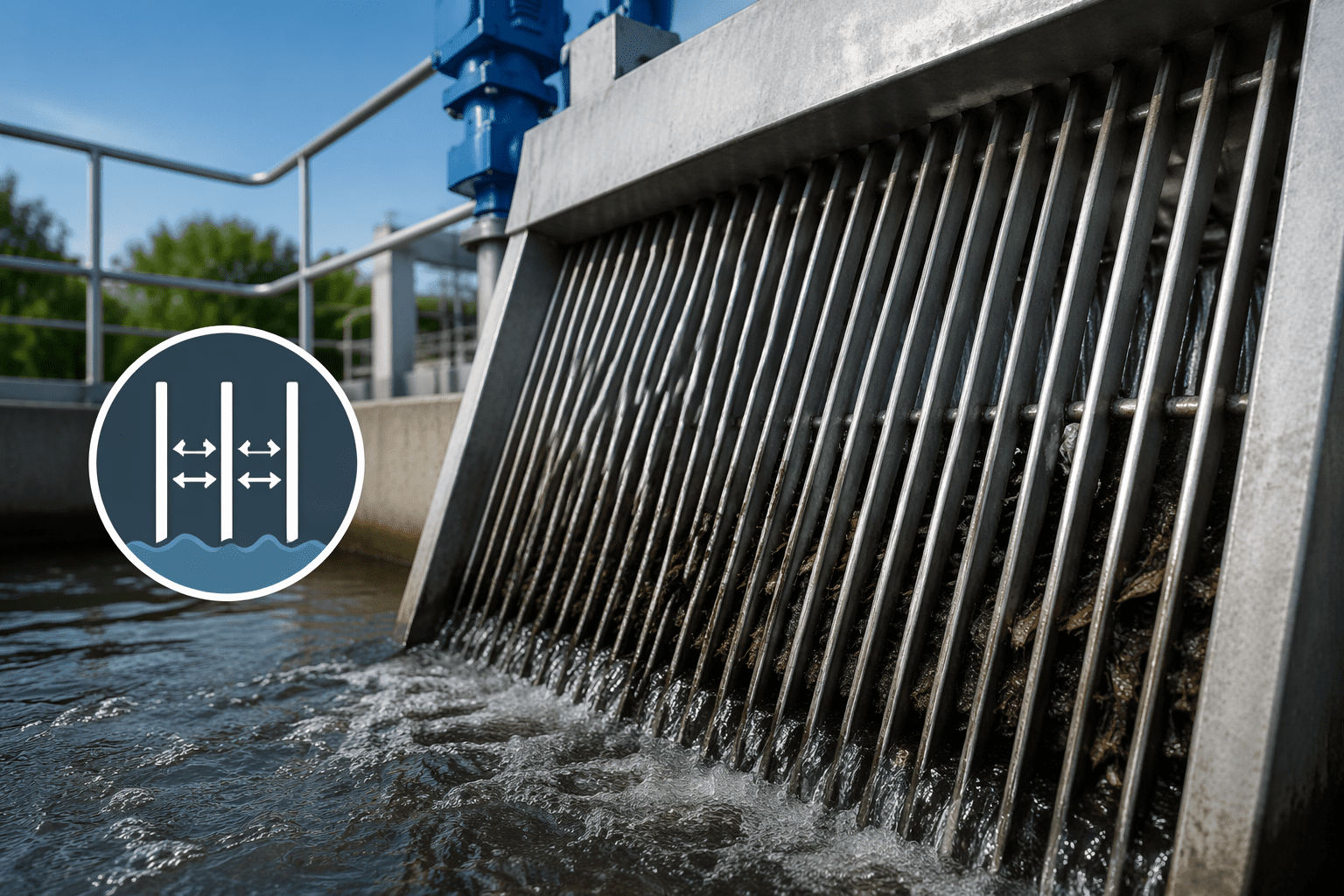
Types of Bar Screens and Their Recommended Spacing
Manual Bar Screens
- Distance Between Bars: 25–75 mm (1–3 inches)
- Ideal for small plants or low flow.
The manual cleaning method requires routine cleaning to maintain proper operations.
Mechanically Cleaned Bar Screens
- Distance Between Bars: 10–50 mm (0.4 – 2 inches)
- Ideal for municipal wastewater treatment facilities with maximized automated removal technology for continuous operation.
Fine Bar Screens (Step, Drum, or Disc)
- Distance Between Bars: 1–10 mm (0.04 – 0.4 inches)
- Suitable for advanced treatment systems such as treatment plants for water reclamation/reuse.
- Most effective at removing finely suspended particles from wastewater.
Consequences of Incorrect Bar Spacing (With Data)
Consequences Related to Wrong Bar Spacing (With A Data Background)
If Spacing is Too Wide:
- Larger debris can pass through
- Increased risk of damage to pumps, etc.
- Reduced efficiency of treatment.
If Spacing is Too Narrow:
- Frequent clogs
- Significant headloss
- Increased energy costs.
If the spacing is not correctly selected, it could increase operational costs by 15 to 25% on an annual basis, so proper spacing selection is very important when considering how to cost-effectively manage a wastewater treatment facility.
Practical Selection Guide (Step-by-Step Framework)
- Analyze the characteristics of the influent – Determine the types of solids to be processed and their concentration.
- Determine the flow rates – Include both average flow and peak flow.
- Evaluate the downstream processing equipment – Find out how sensitive it is to solids.
- Select an initial spacing range – You can use the standard guideline recommendations.
- Validate the selected spacing range using hydraulic calculations – Make sure that both the headloss and the flow rate will be acceptable when the system is used.
Real-World Application Examples
Municipal Sewage Treatment Facilities (STPs)
- Coarse screening 20-40 mm
- Fine screening 6-10 mm
Industrial Wastewater Treatment Plants
- Double pattern w/ fiber and organic materials requires a finer bar spacing.
Water Reuse and Advanced Treatment
- Ultra fine screening provides high-quality effluent suitable for water reuse.
Conclusion
To sum up everything that has been stated so far, the above information on the topic “Bar Screen Spacing” states everything you need to know about how to select the correct bar spacing for wastewater applications. Do you want to learn more about Bar Screen Spacing, or do you want to explore wastewater treatment equipment? Visit Adroit’s website today or contact us by dialing +91 7024848383 or emailing your queries to [email protected].
Frequently Asked Questions About Bar Screen Spacing
What is the standard bar spacing for municipal wastewater?
The average spacing of vertical bars used at municipal-type projects (these screen types include coarse & fine screens).
Coarse screen bar spacings (20 to 40 mm apart) and fine screen spacings (6 to 10 mm apart).
How does bar screen spacing affect headloss?
Shorter spacing between vertical bars on the bar screens significantly impedes flow through the screens and subsequently creates significant head loss as a result.
Which bar screen spacing is best for industrial wastewater?
Each industry is different, some examples would include:
Textile industry (very fine clearances due to the amount of fibers that are removed);
Food processing (may require medium to fine clearances).
How often should bar screens be cleaned?
Cleaning frequency varies based on the clearance spacing used on the screen and the amount of solid material that is captured by the bar screen. Generally, fine bar screens are cleaned very frequently, sometimes up to two or three times as often as coarse screens.
What is the difference between coarse and fine bar screens?
- Course bar screens capture large debris (between 25 and 100 mm apart from one another)
- Fine bar screens capture smaller debris (between 1 and 10 mm apart from one another).
What factors affect bar screen clogging?
Clogging depends on:
- Solids type (fibrous, greasy, or large debris)
- Flow rate
- Bar spacing
- Cleaning mechanism