
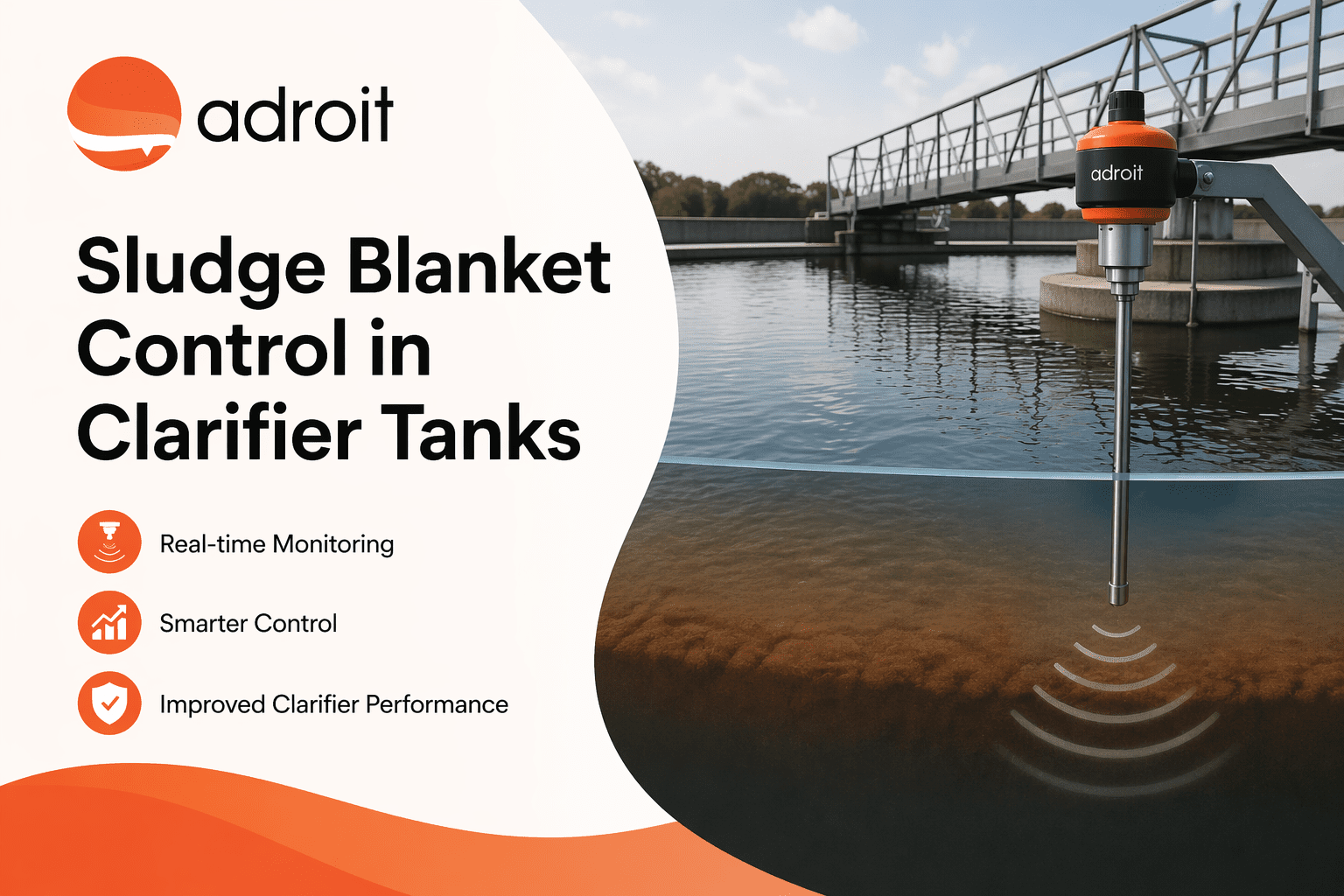

Are you struggling with poor settling solids washout or fluctuating performance in your clarifier tanks? The main cause often lies in improper sludge blanket control. In wastewater treatment, maintaining the right sludge blanket level and ensuring efficient solid liquid separation is crucial to prevent overflow contamination. In this blog, Adroit will provide you with everything you need to know about Sludge Blanket Control in Clarifier Tanks and practical strategies to help you optimize sludge management and improve clarifier efficiency.
What is a Sludge Blanket in Clarifiers?
The sludge blanket is the layer of settled solids which accumulates at the bottom of a clarification tank during sedimentation. As wastewater enters the tank, the heavier particles settle to the bottom due to gravity, thereby forming the sludge blanket, while the clarified effluent leaves out the top of the tank.
Clarifiers are typically classified into two types:
- Primary clarifiers, which remove large solids prior to biological treatment.
- Secondary clarifiers, which separate biological sludge following biological treatment.
The sludge blanket assists with capturing suspended solids within the effluent and improving the clarity of the effluent produced. The typical depth of the sludge blanket ranges from approximately 0.5 to 2.5 meters (1.5 to 8 feet) depending on the design and operational conditions of the wastewater treatment plant.
Why Sludge Blanket Control is Critical
- Prevent Washout of Solids
If the sludge blanket becomes excessively thick, it may rise and overflow into the treated effluent, resulting in poor quality of effluent produced by the treatment plant. As a result, the total suspended solids (TSS) concentration in the effluent may increase by 20-50% which could result in the effluent exceeding its discharge standards.
- Maintaining Treatment Efficiency
Maintaining an optimally functioning sludge blanket will facilitate proper settling and separation of solids in the clarification process. In addition, maintaining control over the thickness of sludge blankets can increase the settling efficiency of solids in the clarification process by 15-25%, thereby improving the overall efficiency of the wastewater treatment process.
- Avoiding Sludge Bulking and Rising Sludge
When somebody has a sludge bulking condition (when filamentous bacteria create a bulking issue), it can disrupt the sludge blanket that forms in the clarifier. Floating Sludge will also cause a disturbance to the sludge blanket and can create an imbalance in the plant’s operations and lower the quality of the effluent treated.
Key Factors Affecting Sludge Blanket Levels
There are multiple operational and environmental conditions that impact the sludge blanket.
- Variances in Flow Rate – Sudden inflow to a clarifier can disrupt the settling process and increase the height of the sludge blanket. The sludge blanket may increase as much as 60% during peak flow.
- Return Activated Sludge (RAS) – If RAS is not controlled properly, you can create too much sludge.
- Temperature – The temperature of the influent will impact the biological activity in the clarifier and thus will impact the settling of the sludge.
- Influent Characteristics – Municipal wastewater may contain lighter/less complex solids than an industrial influent.
This information is important to the operator to maintain a stable and efficient clarifier system.
Methods for Sludge Blanket Measurement
Manual Measurements
In the past, operators relied on simple and inexpensive devices to take measurements of blanket depth, like sludge judges or sampling tubes. However, these types of devices rely heavily on operator experience and only provide sporadic measurements.
Automated Monitoring Systems
Modern wastewater treatment facilities have begun using sophisticated monitoring technologies, such as:
- ultrasonic sensors
- photometric sensors
- pressure-type sensors
These types of systems allow for a good deal of continuous, up-to-the-minute data collection and can improve measurement accuracy by over 90%, which directly affects the ability to improve decision-making and control process variables.
Advanced Sludge Blanket Control Strategies
Advanced Strategies for Sludge Blanket Control
Real-Time Monitoring and Automation
By integrating sensors with SCADA systems, operators can continuously monitor slime levels and react quickly to any changes. Many of the newer automated systems can automatically modify their operations based on current conditions, thus providing the best possible performance.
Optimized Sludge Removal
Sludge removal that is performed with regulated pumping and suction systems will assist in maintaining the ideal depth of the blanket material. Performing timed or demand based desludging will help to prevent over-accumulation of sludge.
Efficient Clarification Systems
Modern clarification systems use both scrapers and suction systems to provide a more equalized sludge collection and removal process. In addition, these systems have reduced the number of dead zones and increased both the efficiency of sludge settling.
The use of these advanced strategies can reduce your operational costs by 10-20% while at the same time increasing the reliability of your systems.
Common Challenges in Sludge Blanket Control
Controlling sludge blanket levels is an ongoing challenge for many operators even with new technology available today. Many times, operators have to combat sludge bulking that results from improper settling of a biological material, equipment failures caused by malfunctioning scrapers or sensors, lack of real-time data resulting in slow reaction times and an over-reliance on operators performing manual tasks that are subject to human error.
Best Practices for Effective Sludge Blanket Management
Approximately 25% of clarifier performance issues are associated with poor sludge management practices. To ensure optimal clarifier performance, treatment facilities should adopt the following best practices for controlling sludge blankets:
- Site Visits manual and automated readings of the system
- Proper Sludge Age (SRT) ensures that biological activity is healthy
- Control RAS/WAS Rates establishes the proper rate for returning excess sludge to the head of the plant
- Regular and Routine Maintenance on Equipment (Scrapers, Sensors, Pumps)
- Operator Training on Proper Handling of Equipment to enable quick resolution of problems.
Utilizing these best practices will not only improve treatment efficiencies but will also increase the longevity of the equipment.
How Adroit Delivers Smart Sludge Management Solutions
Sludge Blanket Control has a significant effect on the efficiency of water treatment. At Adroit, we are comprised of an enthusiastic team of Engineers/Professionals to provide innovative and resilient solutions to our Municipal and Industrial clientele.
Our expertise includes:
- Designing High Performance Clarifier System
- Integrating Advanced Monitoring/Automated Technologies
- Providing Customized Solutions based on each Plant’s requirements
Furthermore, with the incorporation of ISO:9001-2015 Quality Standards, Adroit will ensure continuous improvement of processes for Reliable Solutions that are of high quality. As we work with clients, partners, and employees, the feedback provided will assist us in enhancing our products/services and continue driving innovations within Water Treatment.
Future Trends in Sludge Blanket Control
Future Trends in Sludge Blanket Control are moving toward smarter and data driven systems:
- AI predictive monitoring – anticipatory troubleshooting;
- IoT-enabled systems – remote access and control of systems;
- Full automation of water treatment plants – optimal operational performance.
Project global smart water management market growth rate, based on the above noted processes, is projected to exceed a CAGR of 12%, showing the rapid adoption of advanced technology.
Conclusion
To sum up everything that has been stated so far, the above given information on the topic “Sludge Blanket Control in Clarifier Tanks” states that Sludge blanket control is a vital aspect of clarifier tank operation that directly affects treatment efficiency, effluent quality and operational costs. To enhance the performance of treatment plants, maintain optimal sludge levels, use advanced monitoring systems and adopt best practices. If you want to learn more details about the Sludge Blanket Control, feel free to contact Adroit by dialing +91 70248-48383 or dropping your queries at [email protected].