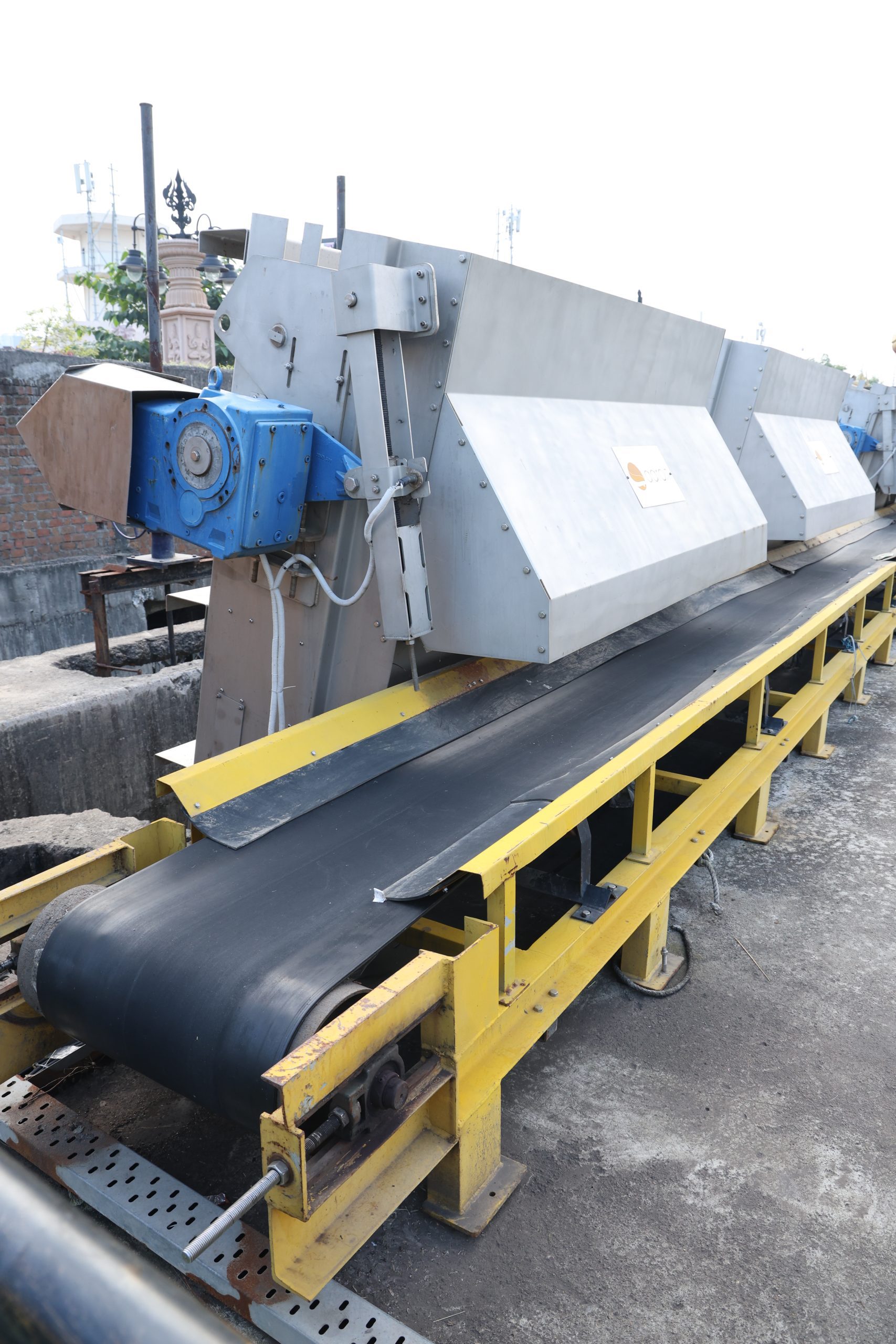
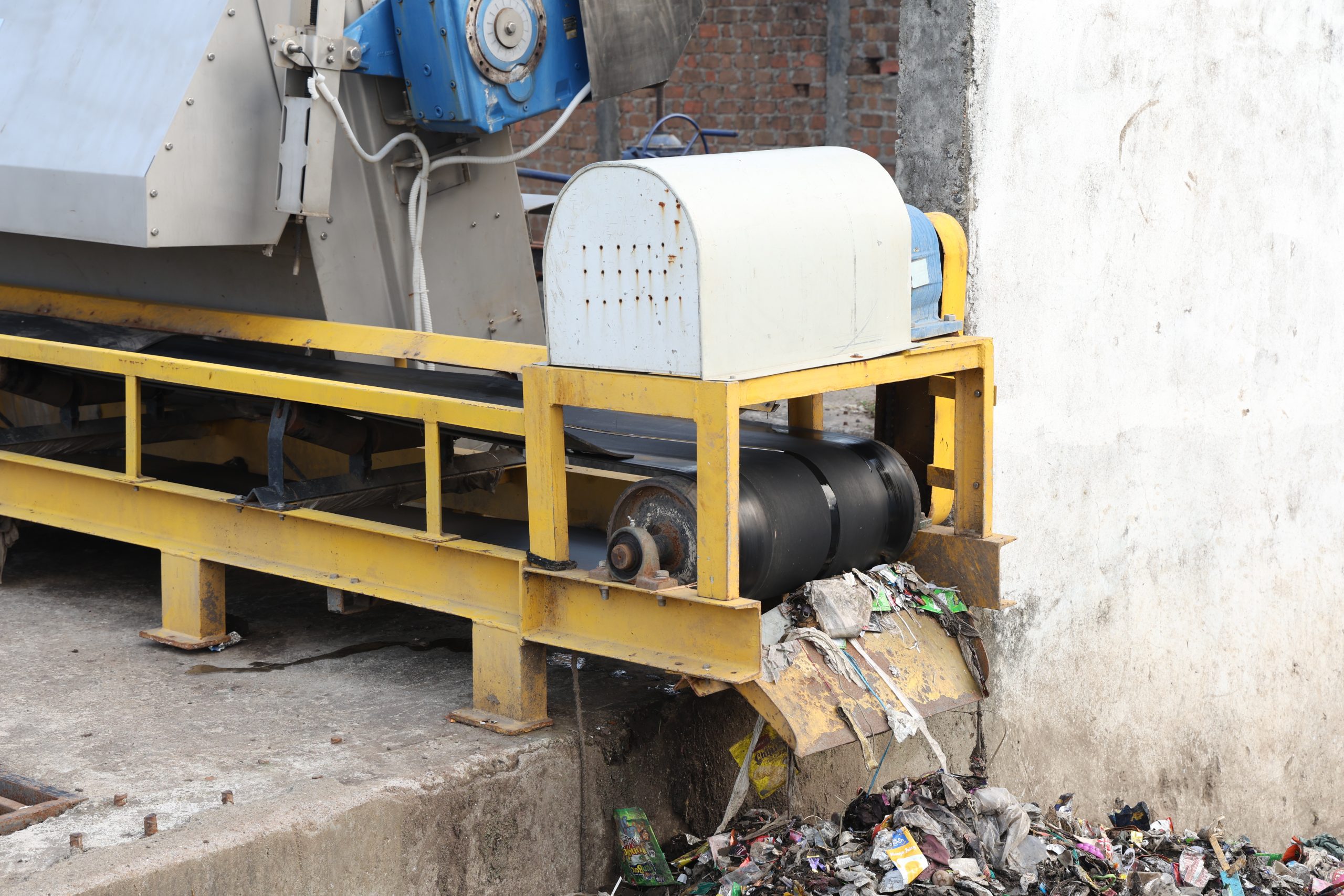
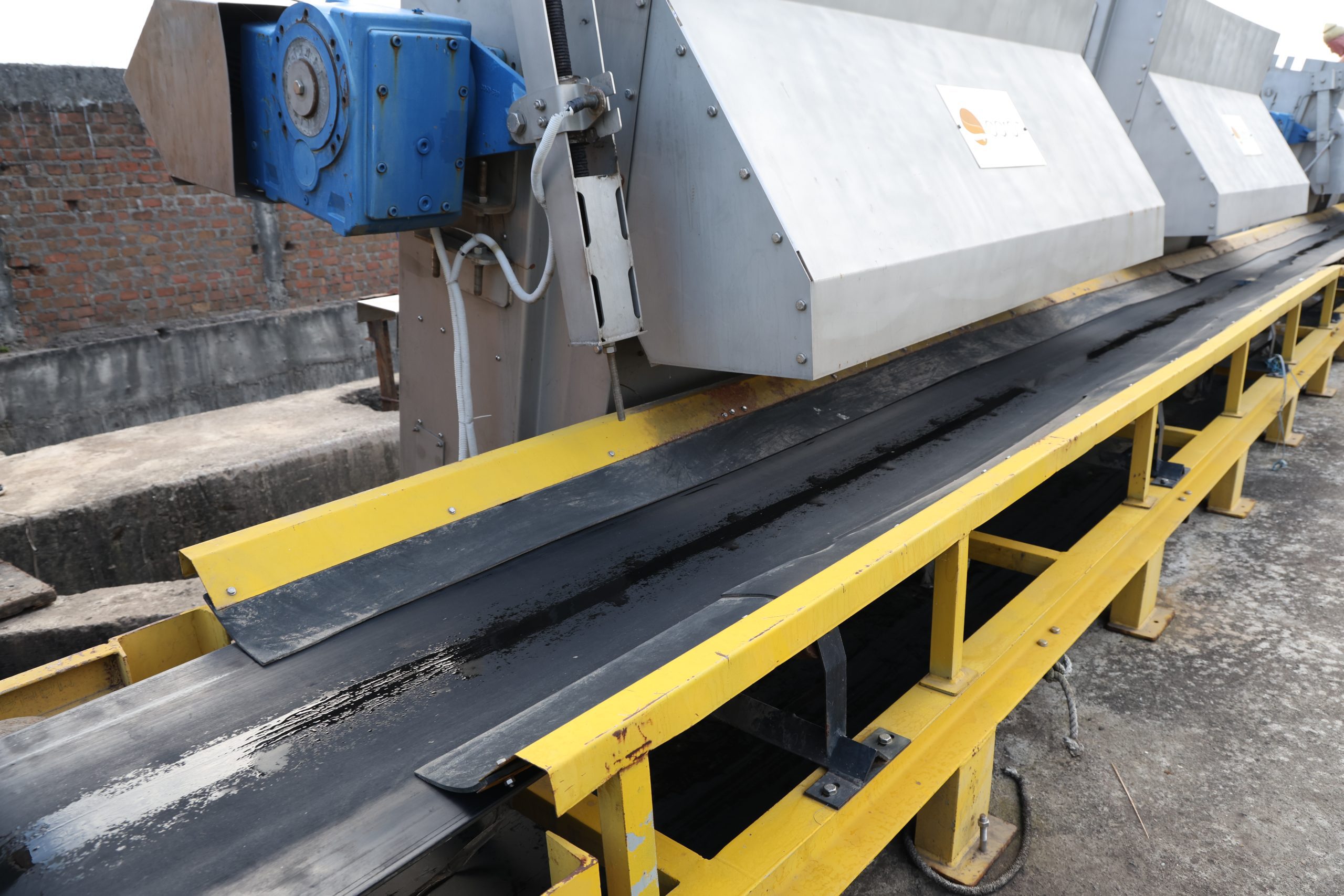
Adroit specializes in the design and manufacture of heavy-duty conveyor belts specifically for use within water and wastewater treatment plants. With an extensive history of providing customers with reliable, low-maintenance conveyor belt solutions for over 35 years, Adroit now provides these same types of conveyor belt systems to municipal and industrial customers throughout India.
Common Applications of Conveyor Belt
A conveyor belt consists of a constantly moving looped material that carries solids such as screenings, grit, and sludge from one area of your treatment plant to another. This eliminates the need for manual handling, increases hygiene, and allows your plant to continue operating without interruption.
Common Applications of Conveyor Belt
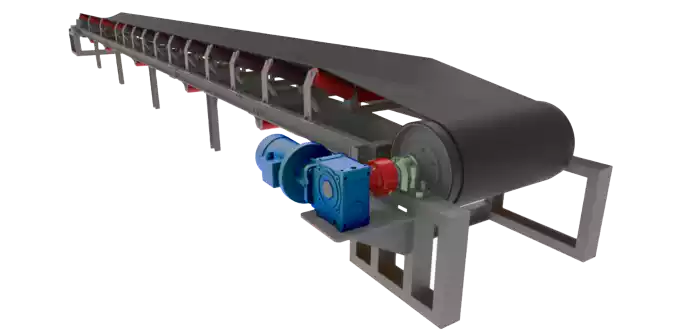
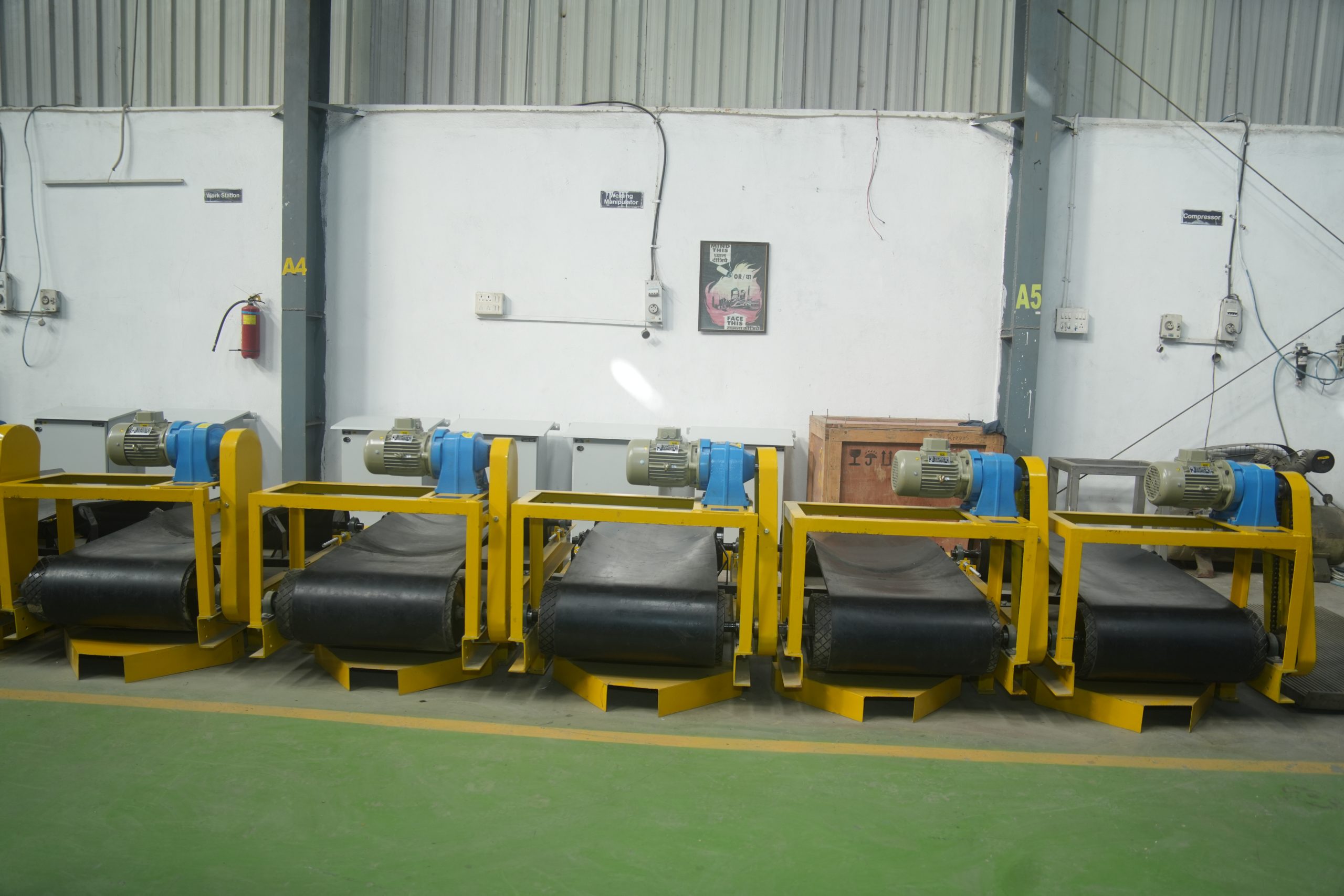
A conveyor belt operates using a motor driven head pulley with a continuous loop of belt material driven around it.
The offset troughing idlers create a bowl shape to hold wet materials securely within a specified width of the belt.
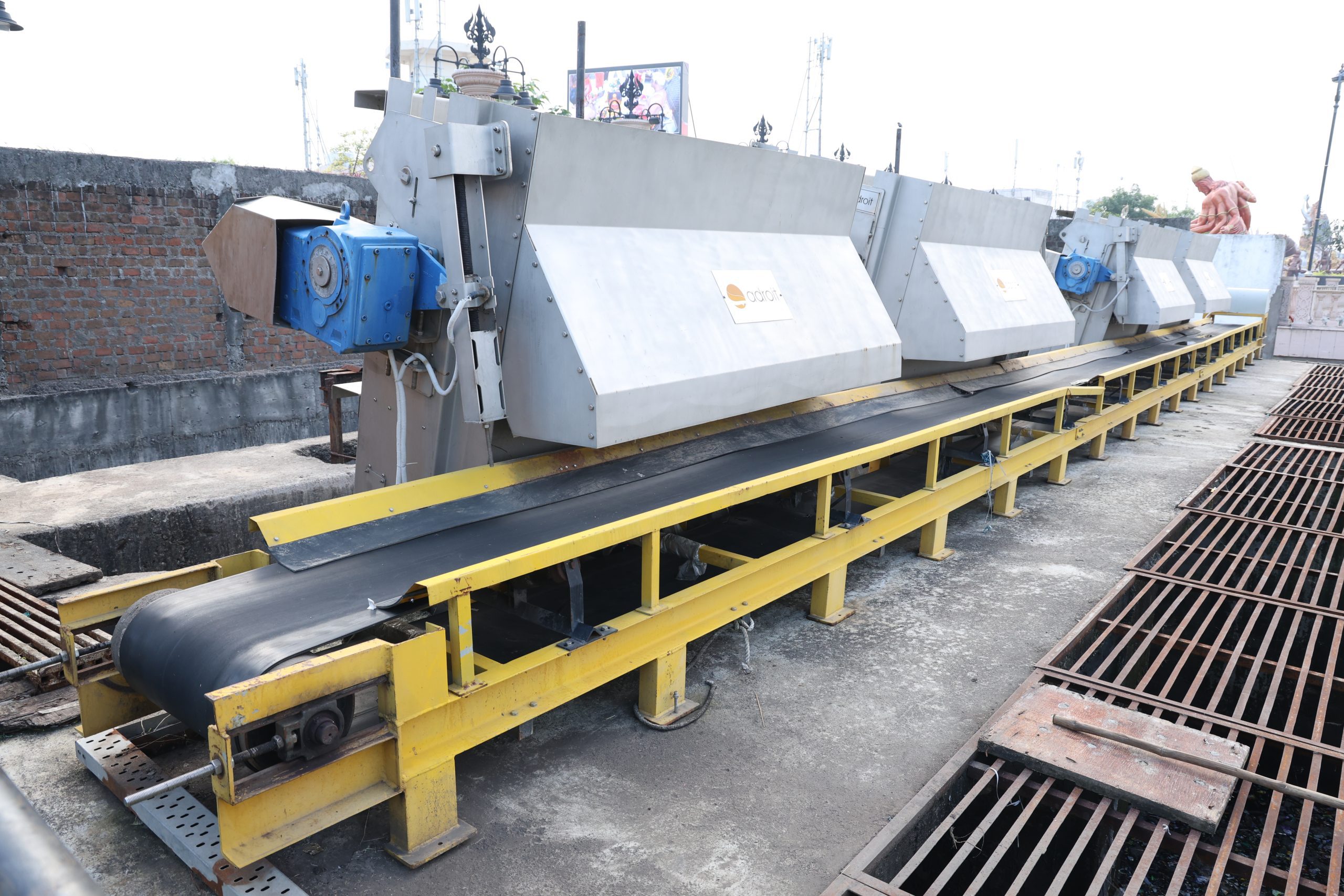
Conveyor belts can be supplied in either straight or inclined configurations.
Conveyors are used to lift materials (screenings) from the elevation of the channel to a skip, compactor or waste container.
Common Applications of Conveyor Belt
Inclined and straight belt conveyors are used for handling and transporting solid waste and screenings. It’s economic design makes it ideal for conveying short and long distances. Our belt conveyors utilize off set idlers to create a bowl shape with the belt to convey bulk materials with minimal spillage.
Bar Screen Discharge Conveyors: Transfers the bar screen discharge onto a waste container.
Grit Conveyor: Transfers the output of the grit chambers to the waste container.
Sludge Cake Conveyor: Carries the dewatered sludge cake from the screw press to the area designated for further handling.
Inter-Process Transfer: Transfers solids between various processes within the treatment plant.
Application Area
Bar screening transport
Grit and sludge conveying
What are the Key Features of Conveyor Belt?
Reduced power consumption results in improved energy efficiency compared with screw conveyors
No product damage due to the non-crushing (compression) quality of belts when transporting materials.
Very minimal spillage, since the trough profile of the belt holds wet materials on the belt.
Can be used for long distance applications, with lengths up to 30 metres.
Handle high volumes of material at peak flow conditions with belt widths up to 1200 mm.
Corrosion-resistant using an SS304 grade stainless steel frame suitable for carrying wet and/or aggressive materials/environments.
Fully customisable – engineered to match the length, width and angle of inclination, including all materials of construction, to match the unique requirements of your plant.
Dimension and Manufacturing
Length: Upto 30 M Belt Width: 500-1200mm Material : Frame – SS304/MSEP, Belt – PVC/ Nylon With Neoprene Lining. Customisation as per client requirements
Technical Specifications
Parameter
Details
Length
Up to 30 metres
Belt Width
500 mm to 1200 mm
Belt Material
PVC / Nylon with Neoprene lining
Frame Material
SS304 Stainless Steel / MS Epoxy Coated
Configuration
Straight / Inclined
Customisation
Available as per project requirements
What Are the Key Differences Between Belt Conveyor & Screw Conveyor?
Features
Conveyor Belt
Screw Conveyor
Best for
Long distances, high volumes
Short distances, enclosed transport
Energy use
Lower
Higher
Material condition
Preserved
Can be compressed
Odour control
Open
Enclosed — better for odour
Maintenance
Easy to inspect & clean
More complex
What is a conveyor belt used for in a wastewater treatment plant?
In wastewater treatment plants, conveyor belts transport solid waste materials such as screenings, wood chips, grit and sludge from the point where they were removed to the waste bin.
How long can Adroit's conveyor belts be?
Adroit manufactures conveyor belts that are up to 30 meters long, but for longer conveyor belt installations, customers can consult with our engineering team about custom lengths.
What belt material is used?
The construction materials for Adroit’s conveyor belts are PVC or nylon loaded with neoprene, selected for use in wet and abrasive wastewater environments.
Can the conveyor belt be inclined?
Yes. Adroit’s conveyor belts can be configured in straight horizontal or inclined arrangements based on where the plant is needed to discharge the waste material.
Is the conveyor belt customisable?
Yes, Adroit conveyor belts are also customizable including belt widths, lengths, angles of inclination, frame materials and drive mechanisms, which can be modified to meet packaging specifications.