

Structural failure in fabricated stainless steel slide gates and penstocks typically results from inadequate consideration of differential head loading, frame rigidity, anchor bolt design, seating performance, corrosion resistance and long term operational reliability. Standards like AWWA C561 and BS 7775 were introduced is to eliminate these types of issues from flow control equipment. However, even when AWWA C561 / BS 7775 standards were utilized some buyers have difficulty interpreting what it means when the product has been “Designed & Tested” in accordance with those two organisations.
Are the materials used to fabricated stainless steel slide gates/penstocks? Have the leakage limits been defined and tested for performance? In this article, Adroit will provide you with everything you need to know about AWWA C561 / BS 7775, what it means for buyers and how to ensure compliance & performance.
Understanding AWWA C561 and BS 7775
AWWA C561: Fabricated Stainless-Steel Slide Gates
AWWA C561 “Fabricated Stainless Steel Slide Gates” is an American Water Works Association standard that establishes requirements for fabricated stainless steel slide gates.
The origin of the standard is the American Water Works Association (AWWA), which developed it in the United States. The primary purpose of the standard is to specify the minimum requirements for the design, materials, construction and testing of vertically mounted stainless steel slide gates.
The following are the most important characteristics of AWWA C561 slide gates:
- Materials: The material used to fabricate AWWA C561 slide gates is fabricated stainless steel, equipped with ultra-high molecular weight (UHMW) polyethene seals.
- Leakage Rate: A maximum leakage rate of 0.10 gallons per minute per foot (gpm/ft) of seating perimeter under defined differential seating head conditions is required.
- Application: AWWA C561 slide gates are used to seat/unseat a head for controlling flow into a water or wastewater system.
- Revisions: Recent revisions of AWWA C561 (e.g., C561-21) have included sections discussing corrosion, including how elastomers are affected by chlorine/chloramine degradation.
BS 7775: Scope and Applicability
BS 7775 is a British Standard published by the British Standards Institution (BSI) that applies to the design and construction of flat-bottomed, vertical, cylindrical steel tanks used for storing refrigerated liquefied gases.
Key Points:
- Applies to cryogenic liquefied gas storage tanks, not flow control equipment.
- Covers structural containment design under low-temperature service conditions.
- Includes requirements for shell design, base interaction, and thermal contraction.
- Specifies material toughness and welding suitability for cryogenic environments.
- Does not define seating leakage performance or differential head design for slide gates.
- Is not technically equivalent to AWWA C561 for fabricated stainless steel slide gates.
What “Designed & Tested” Should Mean in Real Terms
The “Designed & Tested” terminology must also go beyond simply being referenced in brochures and presentations, and must also include documented engineering logs showing the validation of engineering.
With the following information listed below included in constructing engineering documents, you should be able to locate the validation.
Includes:
- All structural design calculations
- Documented certification of material grade
- Documented specification of the welding procedure
- Records of successful hydrostatic testing
- Documented proof of leakage performance.
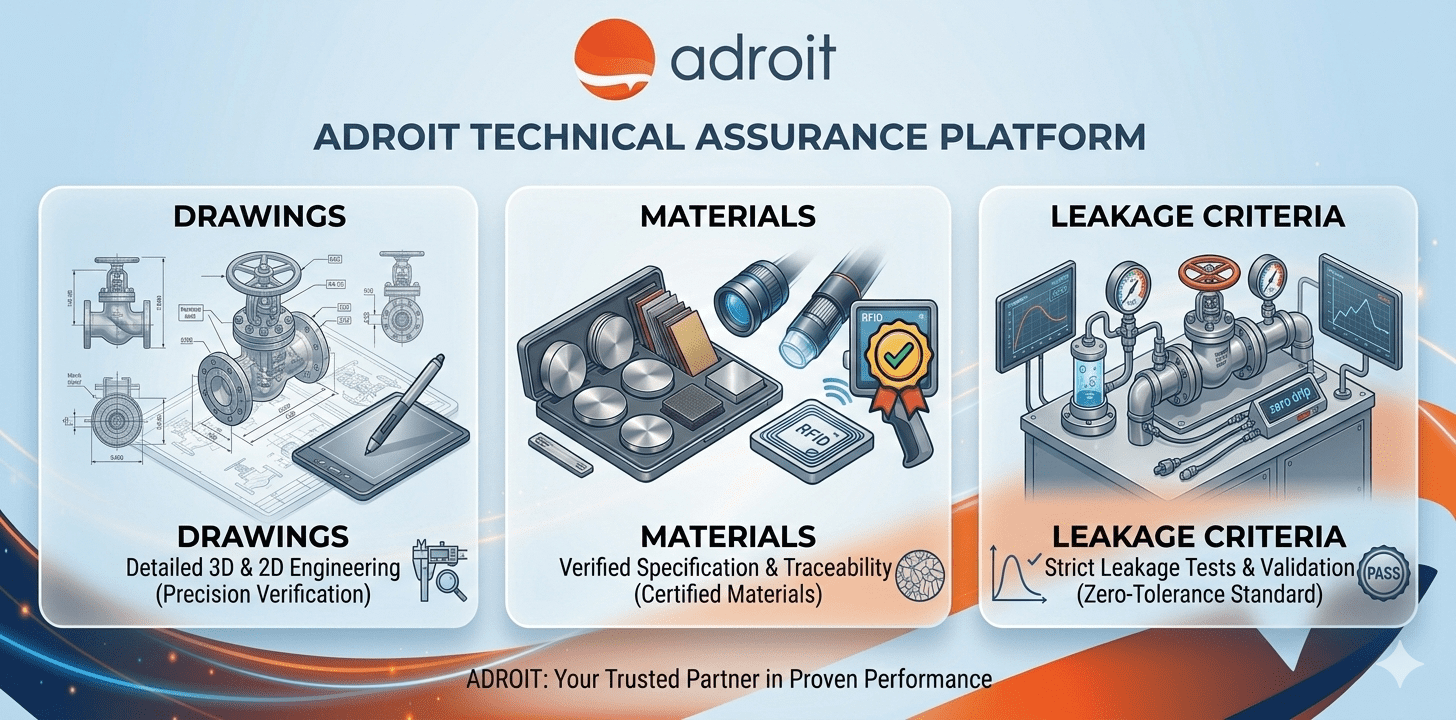
What Buyers Should See in Engineering Drawings
Here are some key things to look for regarding engineering drawings that indicate documentation of validation.
- Structural Design Transparency
Any drawing must have the following information specified:
- Gate leaf thickness, frame section modulus and anchor bolt design loads
- Maximum design differential head rating and allowable deflection limits under load
- All stress calculations and allowable limits
- Details of the anchoring method, plus foundation detail
If any of these components are not included, then there is no means of validating that the structural design is satisfied.
- Fabrication Details
All drawings, to be compliant, must include the following:
- The configuration of all joints
- Types of welding and the standard being used for each type of welding
- Anchor bolt specification, including size, grade, material, embedment depth and installation method
- Details of the embedded frame interface, anchor configuration and seating surface alignment
- Compliance References
Drawings must contain the following references:
- Specific clause references such as “Complies with AWWA C561” clearly indicated on drawings and documentation
- Various inspection points throughout the construction process.
- The various methods of testing utilised
If testing or applicable clauses are referenced within the title block only, then that should be viewed as a red flag.
Materials: What Compliance Should Translate Into
Material Grades & Certifications
Buyers should expect:
- A clearly defined steel grade
- Mechanical properties conforming to the industry standard
- Mill Test Certificates
- Evidence of existing corrosion resistance
Compliance with material substitution without prior approval can affect the original manufacturer’s compliance.
Traceability Requirements
To consider a manufacturer compliant, the following is required:
- To have a tracking system for steel plate batches
- Heat number identification
- Inspection documentation
- Records of handling materials
Protection of buyers’ interests during the audit process & in the event of disputes.
Corrosion Protection Systems
Corrosion is a primary concern for all water/wastewater systems as it takes place quickly and continuously.
In addition to meeting the corrosion resistance requirements as above, manufacturers must also have:
- Coatings approved for the intended application
- Preparation standards for surface preparation before the application of coatings
- Verification of dry film thickness following application of coatings
- Verification of compatibility with drinking water (if applicable)
Failure to follow recommended practices when applying coatings can result in premature structural deterioration or seal failure.
Leakage Criteria: The Most Overlooked Buyer Concern
The reality is that most buyers do not spend the time or energy to properly evaluate their leakage testing (and how it affects their projects) during their procurement process, yet it is very important!
Reasons to consider the standards for leakage include:
- The conservation of water
- The integrity of structures
- The risk of contaminating the soil
- Lost production time
A small leak may lead to a large failure of a piece of infrastructure.
Acceptable Leakage Limits
Under AWWA C561, leakage acceptance criteria are defined based on allowable leakage per foot of seating perimeter under specified differential head conditions.
To complete this testing, the following is required:
- Subject the gate assembly to the specified differential seating head during hydrostatic testing
- Measure gate leaf deflection and frame distortion under applied differential head
- Measure leakage along the seating perimeter in accordance with AWWA C561
- Verify the integrity of welds
The results of these tests must be documented and validated.
Factory Testing vs Site Testing
When comparing factory vs. site testing, both testing methods are critical. Factory testing confirms the manufacturing quality of the fabrication, as well as the integrity of the welds. Site Testing confirms the structural behaviour of the product in actual conditions with respect to the foundation conditions, as well as settlement and/or installation issues. If a project skips hydrostatic testing at the project site, the project’s risk will be greatly increased.
How Compliance Impacts Total Cost of Ownership
Complying with all the appropriate regulatory bodies when selecting compliant slide gates or penstocks has a direct impact on the overall cost of ownership. The benefit of selecting compliant gates includes:
- Increased service life
- Decreased maintenance frequency
- Decreased potential for catastrophic failure
- Fewer emergency shutdowns
- Increased operational reliability
Selecting non compliant equipment may result in higher leakage losses, increased seal replacement frequency, reduced service life and higher long term maintenance costs.
Common Mistakes Buyers Make While Evaluating “Designed & Tested” Claims
The following are mistakes commonly made by buyers when evaluating any “Designed & Tested” claims.
- Accepting claims of compliance without verifying the documentation
- Only comparing by cost
- Ignoring leakage test reports
- Failing to review the coating specifications
- Not verifying that structural calculations were performed
How Adroit Ensures True Compliance and Performance
Adroit uses the following standards to ensure all products are compliant and perform as designed:
- Engineering-driven design.
- Manufacturing process follows international standards.
- Quality control and testing procedures.
- Extensive expertise in the design and manufacture of water and wastewater treatment equipment.
- Adroit’s mission is to provide modern engineering solutions to global water challenges.
Checklist for Buyers Before Procurement
Before approving any slide gate or penstock system, the following should be confirmed:
- Engineering drawings include all necessary structural calculations.
- Material certifications are provided.
- Welding Procedures are documented.
- Leakage test report(s) are provided.
- Compliance clauses are clearly referenced.
- Third-party inspection, if required, has been completed.
- All documentation is in order.
Frequently Asked Questions About AWWA C561 / BS 7775
Q1: What types of documentation should purchasers request at the time of purchase to support compliance?
Purchasers should ask for the following types of documentation:
- Approved general arrangement (GA) drawings
- Structural design calculations
- Material test certificates (MTC’s)
- Welding procedure specifications (WPS)
- Hydrostatic/leakage testing reports
- Third-party inspection certificates, if applicable
Q2: What material specifications should be clearly identified on compliant drawings?
The following material specifications should be clearly identified on compliant drawings:
- Steel grade and thickness
- Coating and corrosion protection systems
- Fastener specifications
- Seal and gasket materials
- Joint and welding details
Q3: What should “Designed & Tested” refer to per AWWA C561 or BS 7775?
“Designed and tested” shall mean that the following have been verified through the engineering process:
- Structural calculations
- Material grade certification
- Welding fabrication compliance
- Hydrostatic and leakage test reports
- Reference to the applicable clauses contained in the engineering drawings
Q4: Is factory testing sufficient, or is on-site testing required?
Factory testing verifies fabrication compliance in accordance with AWWA C561. The hydrostatic testing done on-site to verify the structural integrity of the system, the compliance of how the system was bolted to the foundation and the in service leakage performance of the system are critical before commissioning a system.
Q5: Why are these standards significant to municipalities for infrastructure projects?
These standards provide:
- Safety of the public
- Protection of the environment
- Durability of the structure
- Approval from regulatory agencies
- Accountability to the public for procurement purposes
Conclusion
To sum up everything that has been stated so far, the above information on the topic “AWWA C561 / BS 7775: What It Means for Buyers: what “designed & tested” should translate to in drawings, materials, and leakage criteria” states everything you need to understand about AWWA C561 / BS 7775, what “Designed & Tested” means and more. If you want to learn more about AWWA C561 / BS 7775, feel free to contact Adroit today by dialling +91 70248-48383 or emailing [email protected]. Visit our website today!