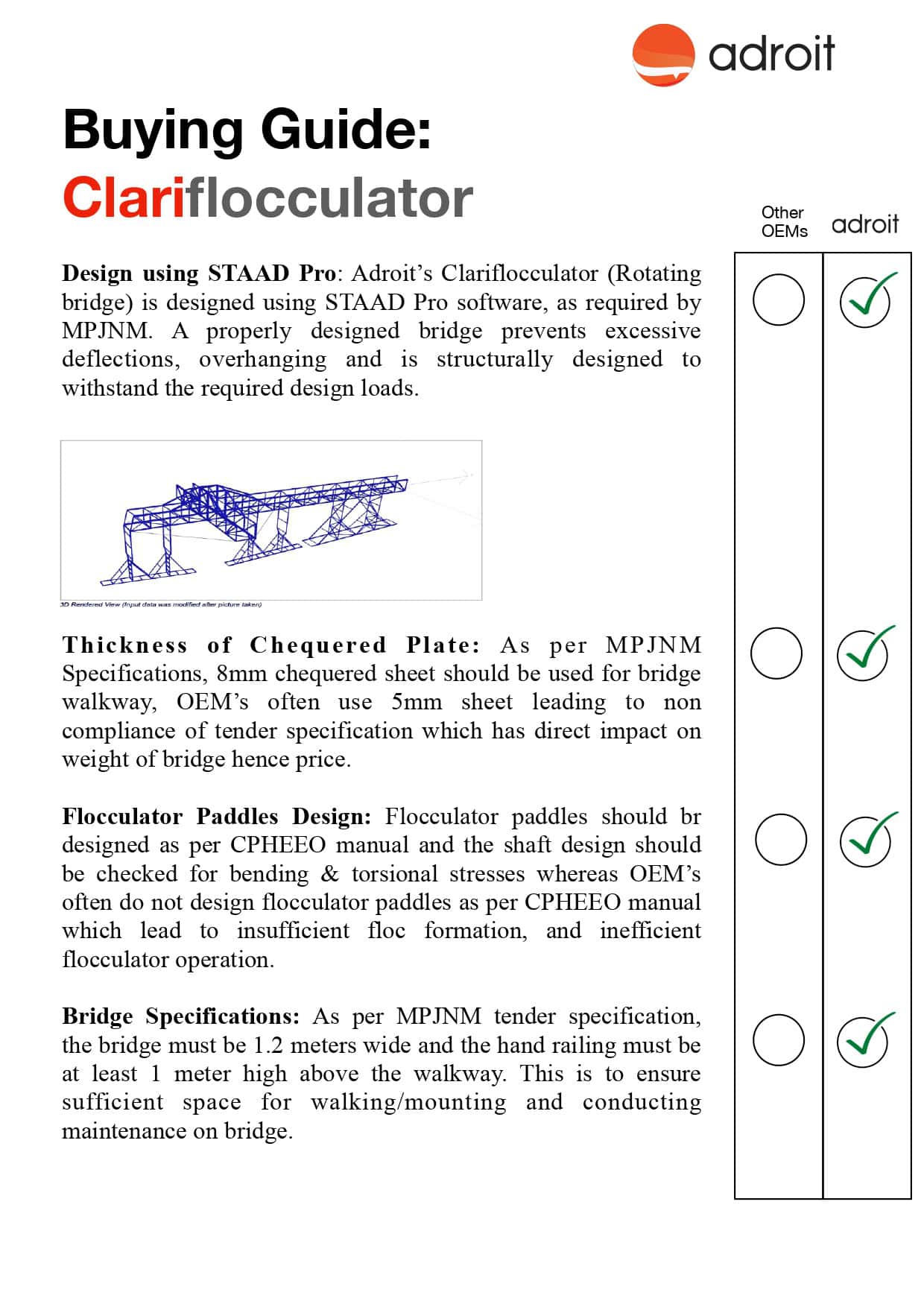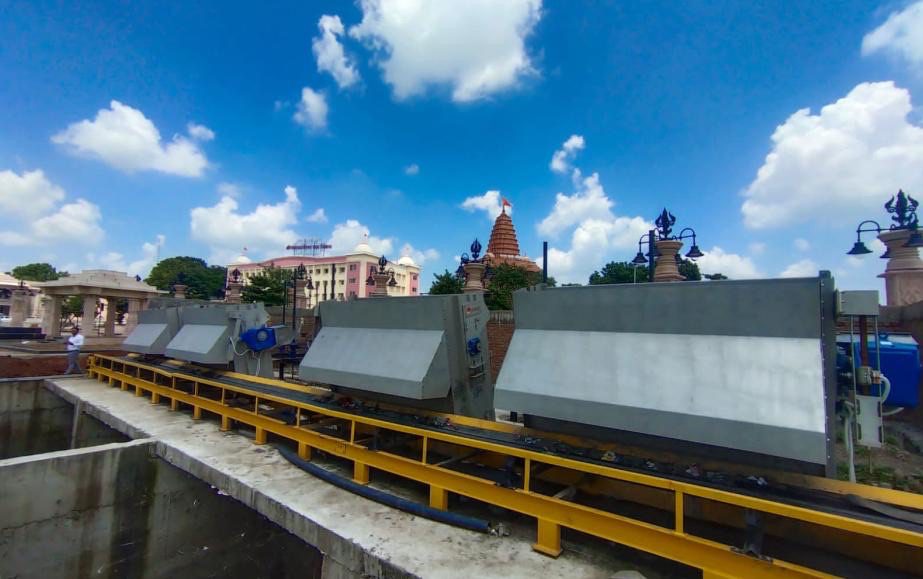


Water treatment ensures safe and clean water for public use. Primary treatment is the very first step, in which large solids and debris are removed from the water before more advanced purification may be undertaken. This is done by utilizing screens to stop larger objects-such as leaves, trash, or branches-from flowing through while allowing clean water to run smoothly through.
Several types of screens are utilized in primary water treatment, namely Bar Screens, Step Flow Screens, and Manual Bar Screens. All come with their advantages and disadvantages, depending on the type of water itself and what a given water treatment plant feels it needs from the equipment. In this blog post, we’ll understand How to Choose the Right Screen for Primary Water Treatment.
Introduction of Primary Water Treatment
Primary water treatment is the first step in water purification wherein large particles and debris are removed. Not to make the water perfectly clean, but to procure it more suitable for further treatment. Screens are the key apparatuses in this process.
There are different types of screens used to filter out larger debris, depending on how much and what type of debris is in the water. Let’s look at the three broad classes of screens: Bar Screens, Step Flow Screens, and Manual Bar Screens.
1. Bar Screens
These are among the most common kinds of screens used in water treatment. Bar screens consist of a series of parallel bars relatively close to each other, and these parallel bars extend across the channel through which sewage or wastewater passes. As the wastewater makes its way through the medium, the rods-holding effectiveness is any large debris that gets caught will not escape the channel, while allowing the treated water to continue flowing through.
Key Features:
- Bar Type: The bars are mostly made out of stainless steel which is strong and resistant to rust.
- Cleaning: Bar screens can be manually cleaned or incorporate a mechanical cleaning system that uses brushes, rakes, or other devices to remove trapped debris.
Advantages:
- Suitable for Large Debris: Bar screens effectively catch large-sized refuse, including garbage and tree branches.
- Easy to install: Relatively easy to install and maintain.
- Durable: Stainless steel bars will generally hold up relatively well for a long time even in outdoor conditions or tough environments.
2. Step Flow Screens
Step flow screens are constructed with gains of several stacks or plate steps to eliminate smaller debris while permitting the free passage of water. A step screen is generally well advanced compared to bar screens and apt to handle more flow than bar screens.
Key Features:
- Step Design- The steps/plates are arranged so that water will pass through and debris will be trapped at various levels.
- Proficient Filtration- They are likely to catch particles smaller than those captured by bar screens because of their design.
- Automatic Cleaning- A majority of the step flow screens meet self-cleaning systems for getting rid of obstructed debris without needing manual labor.
Advantages:
- Good for Small Debris- These screens are good at trapping both large and extremely small obstructions.
- Handles Higher Flow Rates- Step flow screens stand much better on higher flow rates when your plant processes much water at a go than bar screens.
- Minimal Maintenance- Since these screens come with automatic cleaning, they don’t require manual or other work anymore.
3. Manual Bar Screens
Manual bar screens are bar screens that rely on manual labor for cleaning. Since there is no automatic cleaning, a worker needs to clear the debris on the bars manually.
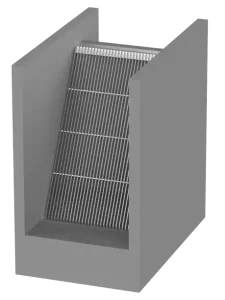
Main Characteristics:
- Simple Design: Similar to bar screens, manual bar screens consist of closely spaced bars to catch debris.
- Manual Cleaning: These screens require manual cleaning, which is time-consuming and labor-intensive.
- Cost-Effective: These are cheaper compared to more advanced models in terms of installation.
Advantages:
- Value for Money: Manual bar screens are relatively cheaper than other intake screens, hence, good for small operations or limited-budget plants.
- Small Cleansing Operations: In smaller plants or with low water flows, manual bar screens would be low-cost alternatives.
- Budget Constraints: If the initial costs are an issue, then opt for manual bar screens. Just keep in consideration the pay for your workers when using this option.
4. Multi-Rake Screens
A Multi-Rake Screen is a machine that helps clear medium to large floating waste from waters at a water or a wastewater pumping station before reaching the pump. It prevents further traveling of debris to the treatment plant.
5. J-Type Trash Rack
The J-type trash rack is a manually cleaned screen that keeps large and medium debris from entering the pumping station’s intake. It has horizontal bars inside a heavy frame fitted into a vertical guide channel. The screen moves up and down by rollers, making it easier to clean manually. It is designed to let water depth above it and has a perforated basket at the bottom for the collection of waste.
6. Rotary Drum Screen
A Rotary drum screen is a machine that allows the filtering of even tiny floating matter from wastewater before it gets into the treatment plant. The drum has parallel bars installed in a slanting position with one end open to the water. The clean water flows out while larger debris stays inside as the water runs through the drum. The captured waste will then be moved upwards, where water jets will assist in pushing it into a collection trough.
Types of Screenings:
1. Very Coarse Screening:
It is applied in cases where large waste can be present in the flow. These include logs, branches, water hyacinths, weeds, animal carcasses, and rubber tires. The principal aim is to safeguard machinery from damage by large objects. Very coarse screens are installed outside the pumping stations or intake area, and the openings in these screens are typically 50 to 100 mm wide.
2. Coarse Screening:
Coarse screening is employed to eliminate medium-sized trash such as plastic bottles, cans, cloth, plastic bags, napkins, weeds, and bushes before they enter the pumping station. The two principal reasons for coarse screening are:
a) To prevent the pumps from being damaged by preventing large trash from entering.
b) To prevent the pumps from becoming clogged with materials such as plastic and cloth. The pumping station contains coarse screens that have gates preceding and following the screen for servicing. The screen gaps are normally 20 to 50 mm.
3. Fine Screening:
Fine screening removes finer wastes that have come through the coarse screen and are being fed to the treatment plant. Examples of such waste are plastic pouches, vegetable waste in the form of fibrous material, ripped cloth, condoms, and grass. The objective is to eliminate small suspended waste so the downstream equipment functions smoothly. Superfine screens are fitted in the intake area of the plant with gates for maintenance purposes. Gaps in these screens are typically 6 mm, although smaller ones are installed in industrial plants.
4. Super Fine Screening:
Superfine screening is employed to eliminate extremely small waste after water has already gone through the fine screen. This involves such items as fine fibers and hair. Superfine screens are typically installed before membranes in high-level treatment plants, particularly for industrial wastewater. They serve to eliminate any extremely small waste that could interfere with the treatment process.
Types of Screens Required for Different Types of Screenings:
| S. No. | Types of Screenings | Spacings | Screens Required for Particular Screenings |
|
|
Very Coarse Screening | 50-100 mm |
|
|
|
Coarse Screening | 20-50 mm |
|
|
|
Fine Screening | 3-6 mm |
|
|
|
Super Fine Screening | 0.5-3 mm |
|
How to Choose the Right Screen for Primary Water Treatment:
These are the principal factors to consider in choosing a screen for your waste-water treatment system and plant.
- Solid Handling Capacity: While choosing the right screens, firstly you need to check how much solid or waste can be handled by the screen and make sure that it will fulfill all your requirements.
- Water Flow Rate: If your plant is processing considerably high volumes of water, step flow screens will tend to be more effective because they can withstand enormous flow rates, whereas bar screens or manual bar screens normally grapple fine or slow-moving waters.
- Type of debris: If your water carries lots of big objects, bar screens will do just fine at capturing the large chunks. But if there is smaller debris also found, step flow screens can filter out those smaller particles.
- Maintenance: Consider how much labor you can afford for maintenance. Manual bar screens require constant cleaning by hand; step flow screens and self-cleaning bar screens save the labor involved.
- Budget: Manual bar screens are the cheapest to install; however, since they need further continual labor, the long-term cost should be evaluated a bit higher. Step flow screens are expensive but may be better in terms of less labor hiring and performance.
- Size of Treatment Plant: Larger plants or those dealing with high volumes of water should be considering step flow screens to have it all done more efficiently.
Material Selection for Screening Equipment:
The selection of the screening equipment material should be chemically compatible with the fluid and the associated environment to increase the life span. Carbon steels are cheap but unsuitable in corrosive environments. Stainless steels like AISI 304 can do well in sewage treatment environments but fall short in seawater or acidic high-temperature applications. For such applications, stainless steel grades such as 316L, Duplex, or Super Duplex with a PREN value greater than 40 will be highly recommended as good performers.
Final Thoughts
The right screen for primary water treatment can be selected from various alternatives based on several other aspects, namely the type of debris, flow rate, and maintenance considerations. Bar, step flow, and manual bar screens each have their pros and cons. The bar screen will take care of really big debris and simple installation. Step flow screens cater to higher flow rates with higher efficiency of filtration. Manual bar screens allow basic operation but require manual labor for smaller operations. By taking into account the unique needs of the water treatment plant, it is possible to select the most effective screen for improving the efficiency of the primary water treatment operation.
Frequently Asked Questions regarding How to Choose the Right Screen for Primary Water Treatment:
Question. Are manual bar screens cost-effective?
Answer. Yes, manual bar screens can be installed at a lower cost than step flow screens and automatic bar screens. Yet, manual work needs to be performed over time to clean therefore is expensive.
Question. Which screens are appropriate for large water treatment plants?
Answer. Step flow screens are, for the most part, the ideal choice for higher plants and those with higher flow rates and water volumes. They offer better filtration performance, particularly when the water presents mixed sizes of debris.
Question. Can bar screens handle both large and small debris?
Answer. Bar screens are most efficient in the removal of large debris like branches, plastics, and leaves. They are not ideal for fine particles. If it is necessary to remove both big and small debris, step flow screens are a preferred solution.
Question. Do step flow screens require more energy to operate?
Answer. Step flow screens are, in general, more power efficient than bar screens in the case of higher throughput and larger debris loadings. Their automatic cleaning systems decrease the work required to clean by hand, even helping to reduce long-term operating costs.
Question. How long do these screens last?
Answer. Screen lifetime is influenced by the material used, by maintenance, and by the surrounding environment. Stainless steel bar screens and step flow screens can provide extended service with careful maintenance, whereas manual bar screens may need to be maintained more frequently because the screens are washed in hand.