
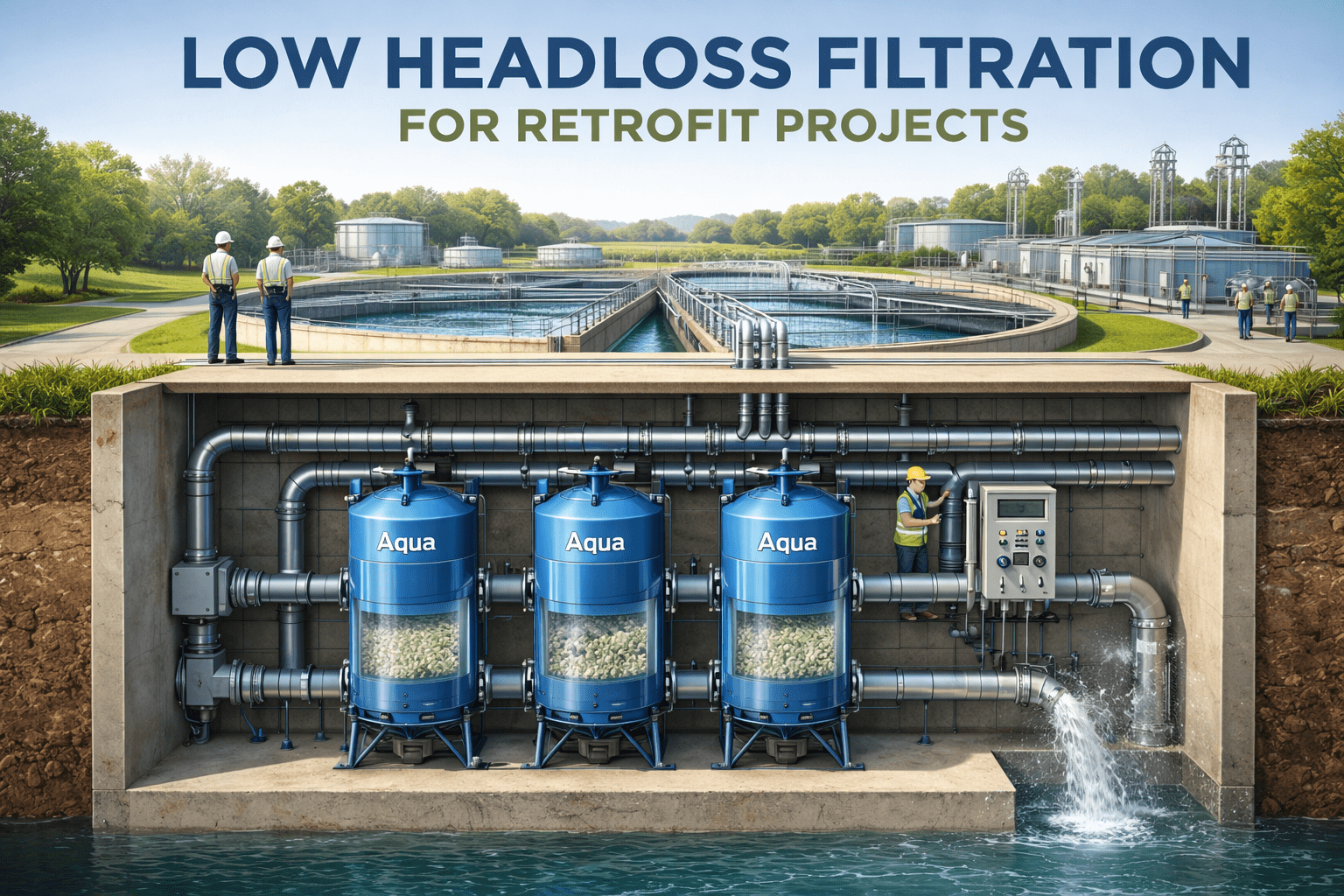

Around the world, water and wastewater treatment infrastructure is coming under increased pressure from many fronts. According to Nature, there will be an overall increase of 20% to 30% by the year 2050, resulting in increased water demands being placed on current treatment facilities. Many municipalities and industrial facilities operate with filtration systems that are two to three decades old, most commonly being pressure-style filters. While reliable when installed, most of these have now become energy inefficient and cannot be adapted to meet current efficiency standards.
Retrofitting of these older systems has become a key strategy for operators looking for ways to improve performance within existing infrastructure without adding to the plant footprint or building new treatment plants. The goals are clear: to provide better treatment quality, lower operational costs, and reduce energy consumption.
Low-headloss gravity filtration systems, specifically pile cloth disk filters, are gaining in popularity due to the fact that they offer a modern and energy-efficient alternative to the traditional pressure filters that have been used for many years, providing facilities with excellent retrofit opportunities. Engineering solutions companies such as Adroit are leading the way in providing these advanced filtration technologies to assist treatment plants with their modernization projects without significant structural renovations.
Why Retrofit Projects Are Increasing in Water & Wastewater Treatment
The emergence of retrofit projects is directly related to the age of the infrastructure as well as regulatory and environmental factors affecting how treatment plants operate.
Almost half (43%) of the wastewater treatment facilities around the globe have been in service for over two decades and have been retrofitted with new filtration systems that typically reduce operation expenses by 15–25%. A significant portion (or 30–40%) of total energy consumed at a facility comes from the energy required to move water through pumps.
There are several reasons for implementing a retrofit project:
- Stricter Discharge Regulations
Government agencies are now enforcing more stringent Quality Standards for effluent, including (but not limited to) total suspended solids (TSS), removal of Phosphorus, and elimination of nutrients from sewage water. These stricter regulations make retrofitting a perfect solution for compliance with official guidelines.
- Commitment to Energy-Saving Initiatives
As the cost of energy continues to rise and numerous countries have set carbon-emissions reduction targets, many municipalities are now putting pressure on their wastewater treatment plants to implement more energy-efficient technologies.
- Limited Expansion Opportunities
Due to the limited amount of land available for most major urban wastewater treatment plants, most of them lack the physical space for facility expansion and therefore require compact solutions (such as high-efficiency retrofit systems) to meet their needs.
- Aging Facilities Infrastructure
Since dysfunctional, out-of-date, and poorly maintained systems may create substantial difficulties and/or costs due to broken or malfunctioning equipment, retrofitting an existing system can create opportunities for better operation.
Understanding Low Headloss Filtration
The term headloss refers to the drop in hydraulic head, or water pressure, as water passes through a filtration mechanism. This drop in hydraulic head is the primary contributor to the amount of energy required to pump water.
Examples of Common Headloss:
- Pressure Filters – 2-6m
- Gravity Cloth Disk Filters – 0.2-0.6m
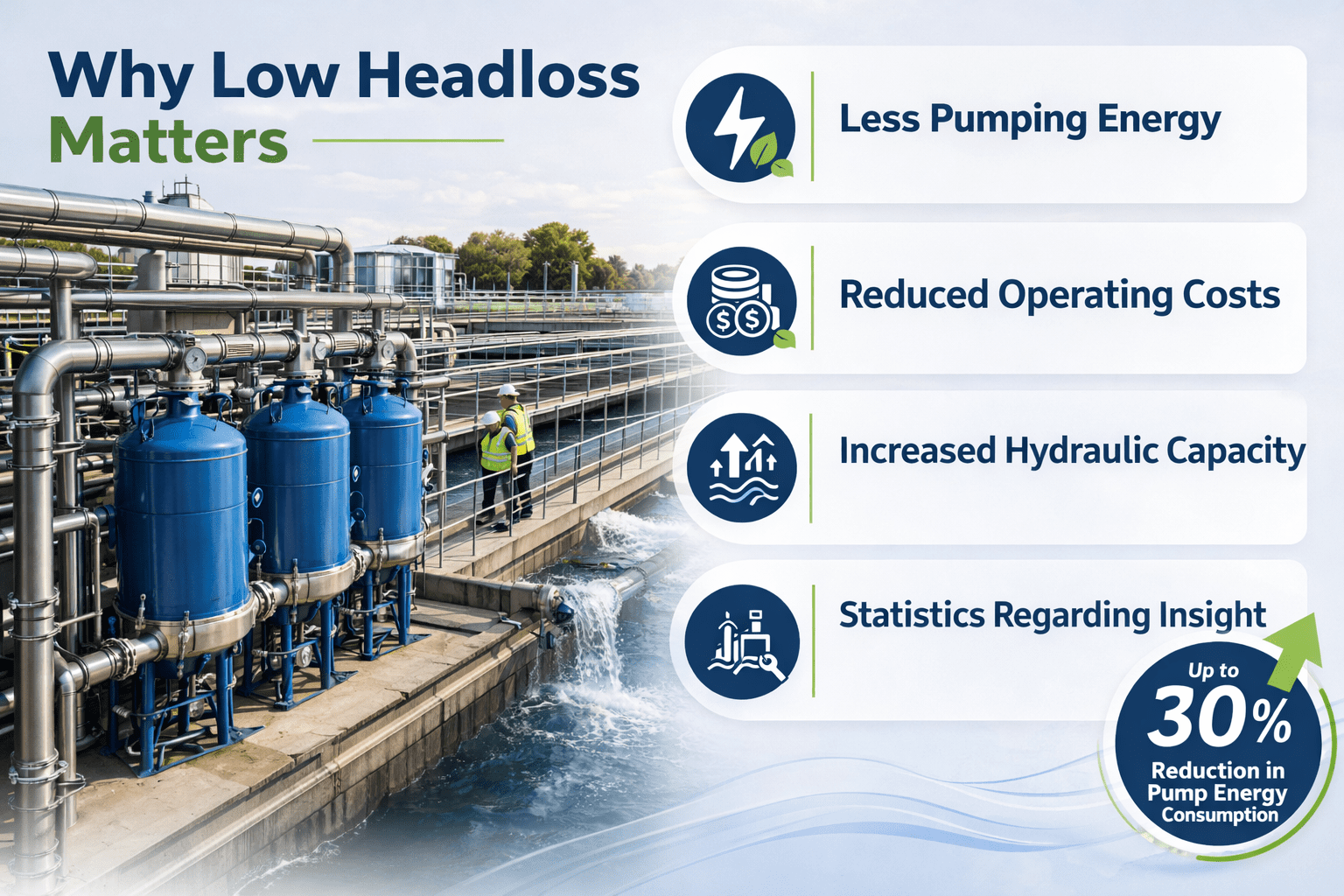
Why Low Headloss Matters
Less Pumping Energy – As the resistance of the filtration system is reduced, the total amount of energy required to move the water is also reduced.
Reduced Operating Costs – Because of the ability to save energy, the overall cost for operation will also be reduced.
Increased Hydraulic Capacity – By maximizing the efficiency of the plant’s existing infrastructure, the plant can accept more water flow (at no additional cost) without any additional construction costs.
Statistics Regarding Insight – Switching to a low-pressure filtration system with a lower headloss could lead to a reduction in your total pump energy consumption by up to 30%.
What Are Gravity Pile Cloth Disk Filters?
The gravity disk filter with a pile cloth disk is a highly effective filter design utilizing a combination of conventional filtration technology and many new and innovative designs that are very efficient in terms of energy consumption. The gravity disk filter with a pile cloth disk has multiple vertical disks covered with a specially designed pile cloth material, which makes them highly effective in providing a high degree of filtration at a very low energy consumption.
How It Works
Water enters the gravity disk filter with a pile cloth disk and flows through (by the force of gravity) the pile cloth material. All suspended and insoluble solids are captured on the cloth surface. Once all suspended solids are captured, the gravity disk filter will provide you with filtered water.
Additionally, the gravity disk filter has an automatic backwash system that will clean the cloth material of all accumulated suspended solids without affecting the operation of the filter.
Performance Data
- Filtration Efficiently: up to 90 – 95% Total Suspended Solids Removal
- Pore Size: 10-20 microns
- Flow Range: 50 m³/h to >10,000 m³/h
Typical Applications
- Municipal wastewater treatment
- Industrial wastewater recovery
- Tertiary treatment processes
- Phosphorus removal systems
Pressure Filters vs Gravity Cloth Disk Filters: A Technical Comparison
| Parameter | Pressure Filters | Gravity Pile Cloth Disk Filters |
| Headloss | 2–6 m | 0.2–0.6 m |
| Energy consumption | High | Low |
| Maintenance | Media replacement required | Automatic cloth cleaning |
| Footprint | Moderate | Compact |
| Retrofit suitability | Limited | Excellent |
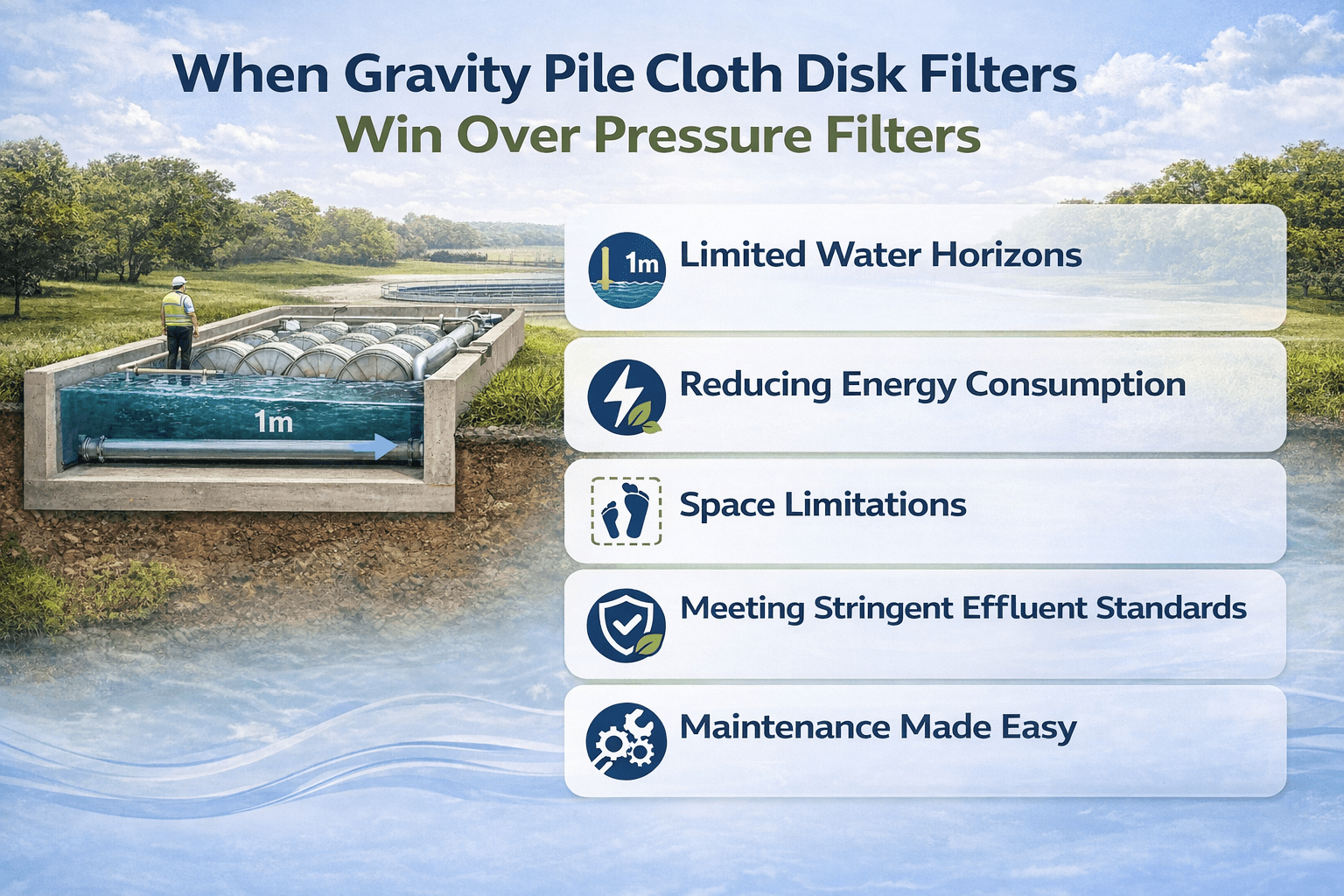
When Gravity Pile Cloth Disk Filters Win Over Pressure Filters
1) Limited Water Horizons.
Whenever a site with a headroom of less than 1m retrofits, gravity-filtered systems typically don’t work at their optimal efficiency level due to insufficient pressure in the pipes. For these sites, (particularly) gravity-fed systems (with little head loss) are ideal.
2) Reducing Energy Consumption.
For plants that want to have a smaller carbon footprint or meet other sustainable goals, gravity systems save energy from pressure systems and will thus greatly reduce operating expenses.
3) Space Limitations.
Using disk filters can save up to 40% in the footprint (of the plant), and, therefore, accommodate plants with constrained expansion capabilities.
4) Meeting Stringent Effluent Standards.
Recent regulations require effluent TSS levels to be < 10 mg/l; cloth disk filters meet these standards because of their construction and are considered the preferred method for tertiary treatment.
5) Maintenance Made Easy.
Unlike pressure filters (which regularly need to change the filter media), cloth disk filters are automated cleaning systems that use much less manual labor and result in reduced downtime.
Civil Modifications Required for Retrofit Projects
While retrofitting existing filtration systems requires minimal construction activity, some specific types of civil modifications need to occur to achieve optimal performance due to the retrofitting process.
1) Modification to Filter Tank: Existing tanks need to be converted from former clarifiers or carbon filtering systems. Structural support (to some degree) may have to be provided to upgrade the filter structure to meet necessary standards. The tank’s shape should be optimized for the new tank type being used.
2) Inlet/Outlet Channel Adjustments: In order for gravity flow to take place (to be operated), it’s often necessary to redesign the hydraulic flow path into and out of the new system, as well as install flow distribution methods to allow for the even and consistent distribution of water to each of the new tank components.
- Disk Filter Frame Structural Support
- Provide stainless steel structural support structures
- Install frames within existing tanks to provide support and alignment
- Backwash Water System Integration
- Install backwash pumps or air-assisted cleaning systems
- Install wash water collection troughs
- Control System Integration
- Install PLC-based automation system
- Integrate with the existing SCADA system for monitoring and control
Key Design Considerations for Retrofit Filtration Projects
Successful implementation of a retrofit requires a thorough evaluation of several factors:
Hydraulic Considerations
- Available headloss
- Peak and average flow rates
- Flow distribution between filter units
Structural Considerations
- Existing dimensions of tanks
- Load-bearing capability of the structure
- Ability to accommodate new equipment
Operational Factors
- Frequency and efficiency of backwashing
- Sludge production/handling
- Ease of maintaining and accessing filters
Regulatory Compliance
- Discharge effluent requirements
- Environmental/sustainability requirements
- Local regulatory guidelines
Real-World Benefits of Low Headloss Filtration in Retrofit Projects
Operational Improvements
- Reduced pumping energy
- Increased treatment capacity due to utilizing existing infrastructure
- Reduced downtime and maintenance costs;
Economic Benefits
- Lower lifecycle cost
- Reduced energy costs
- Decreased chemical usage
Sustainability Benefits
- Reduced carbon emissions.
- Expanded water reuse options.
- Better compliance with environmental regulations.
How Innovative Engineering Supports Successful Retrofit Projects
Engineering expertise is critical to the successful implementation of retrofitting projects. Companies such as Adroit provide complete end-to-end solutions, including:
- Filtering systems designed to meet unique plant specifications.
- Advanced hydraulic modeling to maximize system performance.
- High-quality filtration equipment.
- Installation, commission, and ongoing support.
The end-to-end process facilitated by engineering ensures the integration of new technologies into existing infrastructure, maximizing performance and reliability while minimizing disruption.
In Closing!
Retrofitting existing water and wastewater treatment plants has become a vital component of the modernization process to meet today’s regulatory pressure, rising energy costs, and infrastructure limitations. Water and wastewater treatment plant operators must employ more intelligent, more efficient solutions.
Low-headloss gravity disk filters represent a viable alternative to conventional pressure filters, since they operate with lower energy, more compact footprints, and require less maintenance. Communities and industries can, by utilizing innovative engineering solutions from companies such as Adroit, significantly improve treatment performance, reduce operating costs, and move toward more sustainable water resource management.
Frequently Asked Questions for Low-Headloss Filtration for Retrofit Projects:
What are low-head-loss filter systems that operate with a lot of ease or user-friendliness, such as the traditional way of using gravity filtering systems?
Ans. They allow for the easy movement of wastewater through the filter system and have little head loss (resistance to flow), typically between 0.20 and 0.60m. This makes them more energy-efficient to operate than other types of filtering systems because they don’t require as much pumping energy to move wastewater through the filter system.
How do the pile cloth disk filtration systems work?
Ans. Pile cloth disk filtration systems have rotating discs individually (by gravity) that are covered with fine cloth material. Water moves by gravitational flow through the cloth material, trapping solids out of the water. There is an automatic backwashing system that sprays water onto the cloth material to keep it clean and working at full capacity, without any manual adjustment.
Can I use gravity disk filters to replace an existing filtration system?
Ans. Yes, gravity disk filters make an excellent choice for the replacement of obsolete filtration systems. Their compact size, low head loss, and minimal requirements for civil modifications make them the best candidate for renovating existing treatment plants and upgrading to new filtration technology.
What is the average head loss of pressure filters?
Ans. Pressure filters operate within the range of 2.0–6.0m head loss. Therefore, they have higher resistance to flow than gravity filters, which require more energy for pumping and are less efficient than low-head loss gravity filter systems.
What civil modifications would need to be made to install cloth disk filters in an existing wastewater treatment plant?
Ans. The modifications often include resizing the existing tank(s) in which the filtration occurs, redesigning the existing inlet and outlet channels associated with the filtration process, adding additional structural support for gravity disks, installing backwash systems, and providing upgrades to any electrical control systems associated with the operation of the filters, so that they can efficiently operate within existing plant infrastructures.