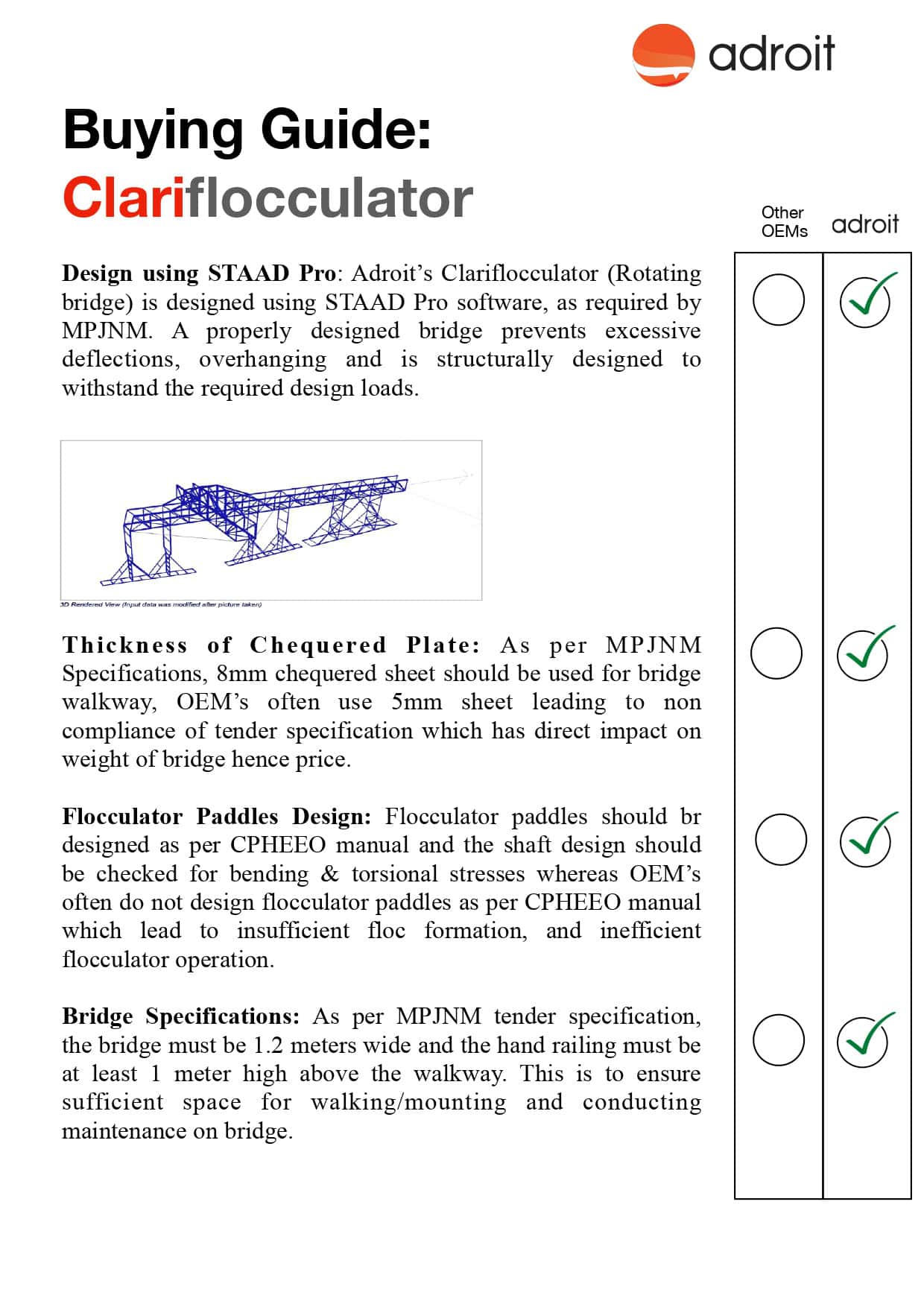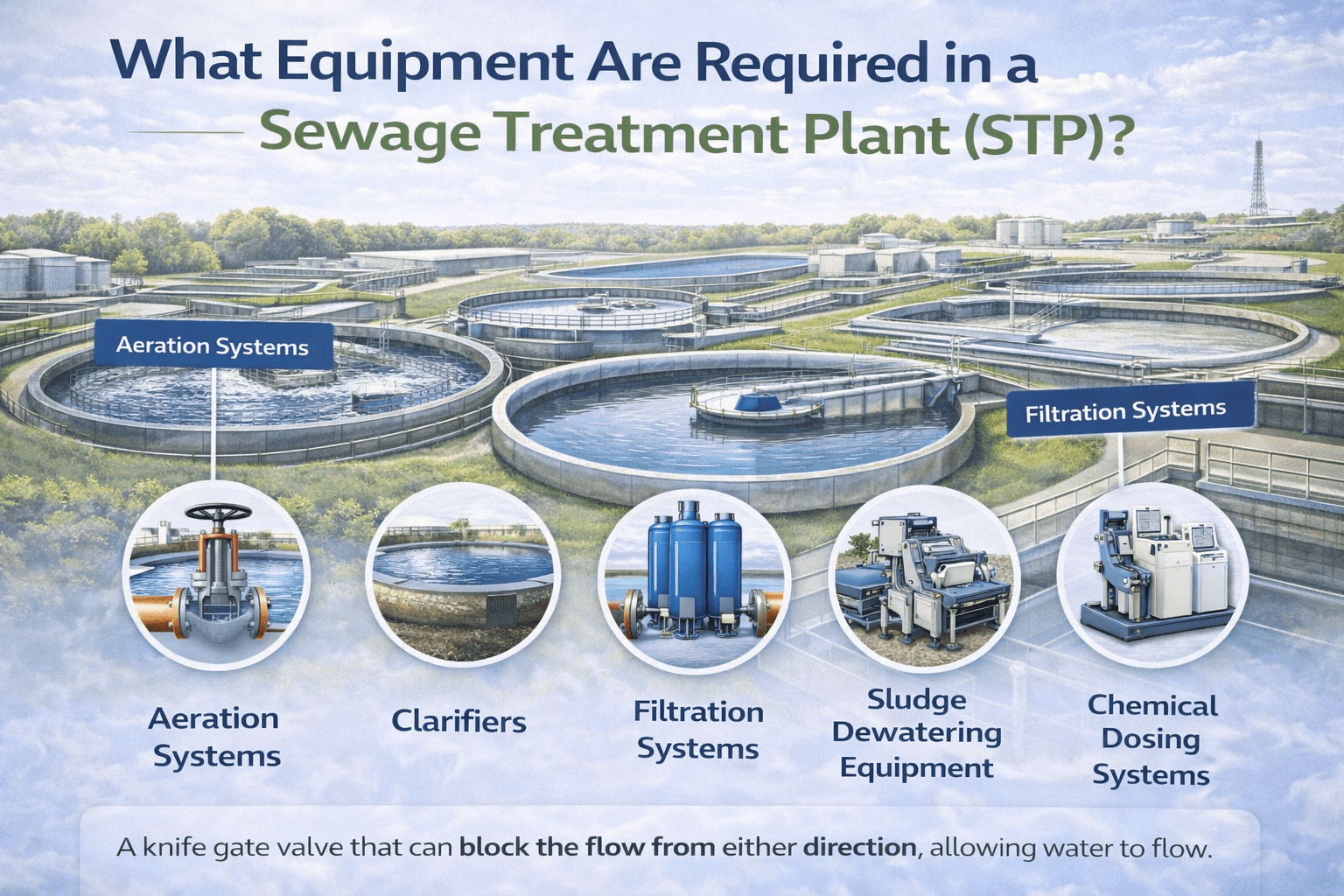


Sewage Treatment Plants, or STPs, have an essential function in safely treating the large volume of wastewater created from domestic, industrial, and commercial sources. Urbanization has led to an exponential rise in our need for high-quality wastewater treatment systems. Since the overall performance of any STP varies greatly depending on determining the correct quality and type of equipment for the plant, selecting the right equipment is vital to ensure that the wastewater is being properly treated to meet the required environmental and regulatory standards.
Selecting inappropriate equipment could cause inefficiencies, increased energy usage, increased frequency of breakdowns, and increased costs for maintaining and operating the plant. Conversely, selecting properly designed and correctly sized equipment increases equipment reliability, minimizes downtime, and allows for consistent treatment performance.
In addition, there are strict discharge limits that must be adhered to for the treated water by all regulatory bodies. Selecting the proper equipment for STPs will enable the facility to meet all regulatory requirements and prevent it from being penalized or causing environmental harm. Therefore, the right equipment is the foundation of an effective sewage treatment system.
What is an STP?
An STP is the facility utilized to treat wastewater generated by residential, commercial and industrial discharges. The primary function of an STP is to remove all contaminants, pollutants, and harmful microorganisms from the wastewater so that the treated water can either be released into the environment or reused.
The treatment process consists of several sequential operations, each of which removes certain impurities:
- Preliminary Treatment: Removes large solids and debris
- Primary Treatment: Seta in suspension; settling of suspended solids
- Secondary Treatment: Biological breakdown of organic substances
- Tertiary Treatment: Advanced purification and disinfection
- Sludge Treatment: Residual solids processing (includes dewatering).
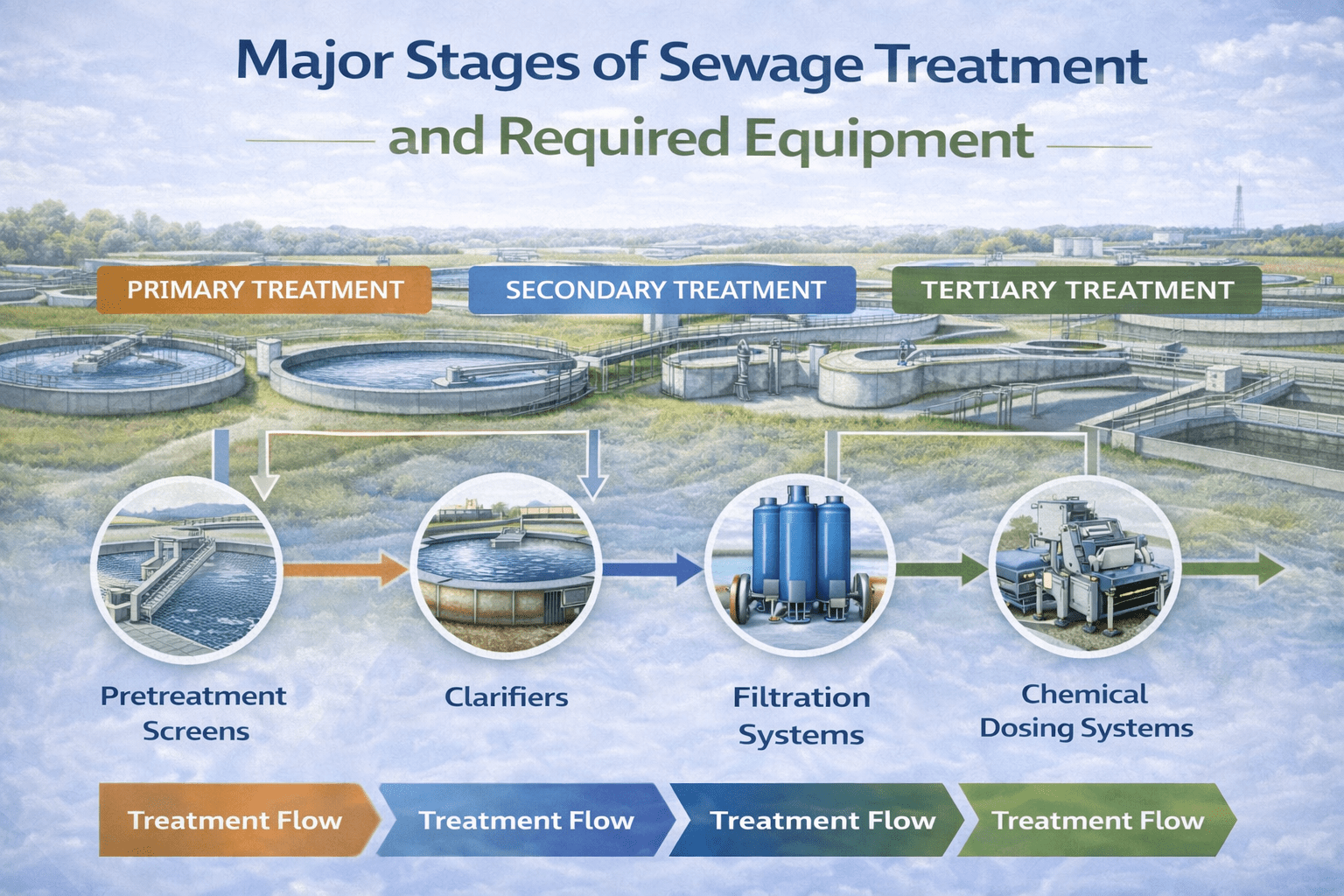
Each operation incorporates specific types of equipment for efficient/effective wastewater treatment results.
Major Stages of Sewage Treatment and Required Equipment
1. Preliminary Treatment Equipment
This is the first step in the STP process – the removal of large solids or debris and grit to protect downstream equipment.
All of these contaminants can be remediated by mechanical means.
Types of Equipment Used Include:
- Mechanical Screening – A basic mechanical means of removing large objects such as plastics, rags, and debris, using coarse and fine screens.
- Grit chamber – The function of the grit chamber is for the removal of sand, gravel, and other heavy inorganic particles in the wastewater stream.
- Grit Removal System – An automated mechanical means for separating and removing grit with improved efficiency;
- Oil and Grease Traps – Used for the separation of floating oil and fats, which may hinder the biological treatment process.
Each of these would prevent equipment damage/clogging within frequently downstream of the STP process, therefore providing smoother plant disruption.
2. Primary Treatment Equipment
A method for removing suspended solids from wastewater through gravity settling.
During this operation, wastewater remains in tanks allowing the heavier solids to settle and the wastewater to be treated by pumping all settled materials out or moving them to secondary treatment.
Types Of Equipment Involved:
- Primary Clarifiers Are Large Tanks Where Solid/Fluid Separation Takes Place.
- Sedimentation Tanks Are Used For Solid/Fluid Separation In A Controlled Manner.
- Sludge Scraper Is A Mechanical Device Used To Collect The Settled Sludge At The Bottom Of The Tank.
- Sludge Collection Mechanisms Are Systems For Transferring The Sludge For Further Processing.
- Primary Treatment Provides A Significant Decrease In Load To The Biological Treatment Processes.
3. Secondary (Biological) Treatment Equipment
Purpose of secondary treatment is to use microorganisms to degrade organic matter. This is the most important step for the degradation of organic pollutants by microorganisms.
Types of equipment involved:
-
Aeration tanks provide a safe environment for the microorganism to thrive.
-
Air blowers provide the oxygen supply needed for the aerobic bacteria to survive.
-
Diffuser provide oxygen distribution throughout aeration tanks.
-
Moving Bed Biofilm Reactor (MBBR) media provides surface area for microorganisms to grow on.
-
Activated sludge system equipment supports the biological treatment process through the dispersal of biomass in suspension.
-
Return activated sludge pumps are used to circulate the sludge back to maintain an adequate concentration of microorganisms in the tank.
Good biological treatment results in the removal of dissolved organic material and improved water quality for disposal.
4. Secondary Clarification Equipment
Secondary clarification equipment for the separation of biological sludge from the treated wastewater. Separation of the biomass from the wastewater after biological treatment is a necessary process.
Types of equipment involved:
-
Secondary clarifiers are the tanks used to allow the biological solids to settle out of solution.
-
Sludge scraper is used to remove the settled biomass from the bottom of the clarifiers.
-
Sludge pumps are used to transfer the sludge for either recycling or further treatment.
This step helps to ensure that treated sewage does not contain any suspended biological solids.
5. Tertiary Treatment Equipment
To Purify or Polish Water
The purpose of tertiary treatment is to further enhance water quality to meet strict guidelines for either discharging any of the wastewater, or for reusing the wastewater.
Equipment Used:
Pressure Sand Filters: To remove fine suspended solids.
Activated Carbon Filters: To remove colour, odour and organic material.
Ultrafilters: To provide high levels of filtration using membrane technology.
Disinfection equipment:
Ultraviolet (UV) Systems: To kill microorganisms using ultraviolet (UV) light.
Chlorination Systems: To chemically disinfect the water.
Tertiary treatment is particularly needed when treated wastewater is to be reused for irrigation, toilet flushing or for industrial processes.
6. Sludge Treatment Equipment
To Handle and Process Sludge Generated During the Treatment Process
Proper management of sludge is one way to reduce the waste volume and/or the environmental impact resulting from the wastewater treatment process.
Equipment Used:
Sludge Thickener: To concentrate the sludge by removing excess water.
Sludge Dewatering Machines: To further reduce the moisture content of the sludge.
Filter Press: To generate a dry sludge cake for disposal.
Sludge Drying Beds: To naturally dry sludge using solar energy.
Sludge Pumps: To pump sludge to different stages of the wastewater treatment process.
Proper treatment of sludge will help reduce disposal costs and the environmental risks associated with the disposal of the sludge.
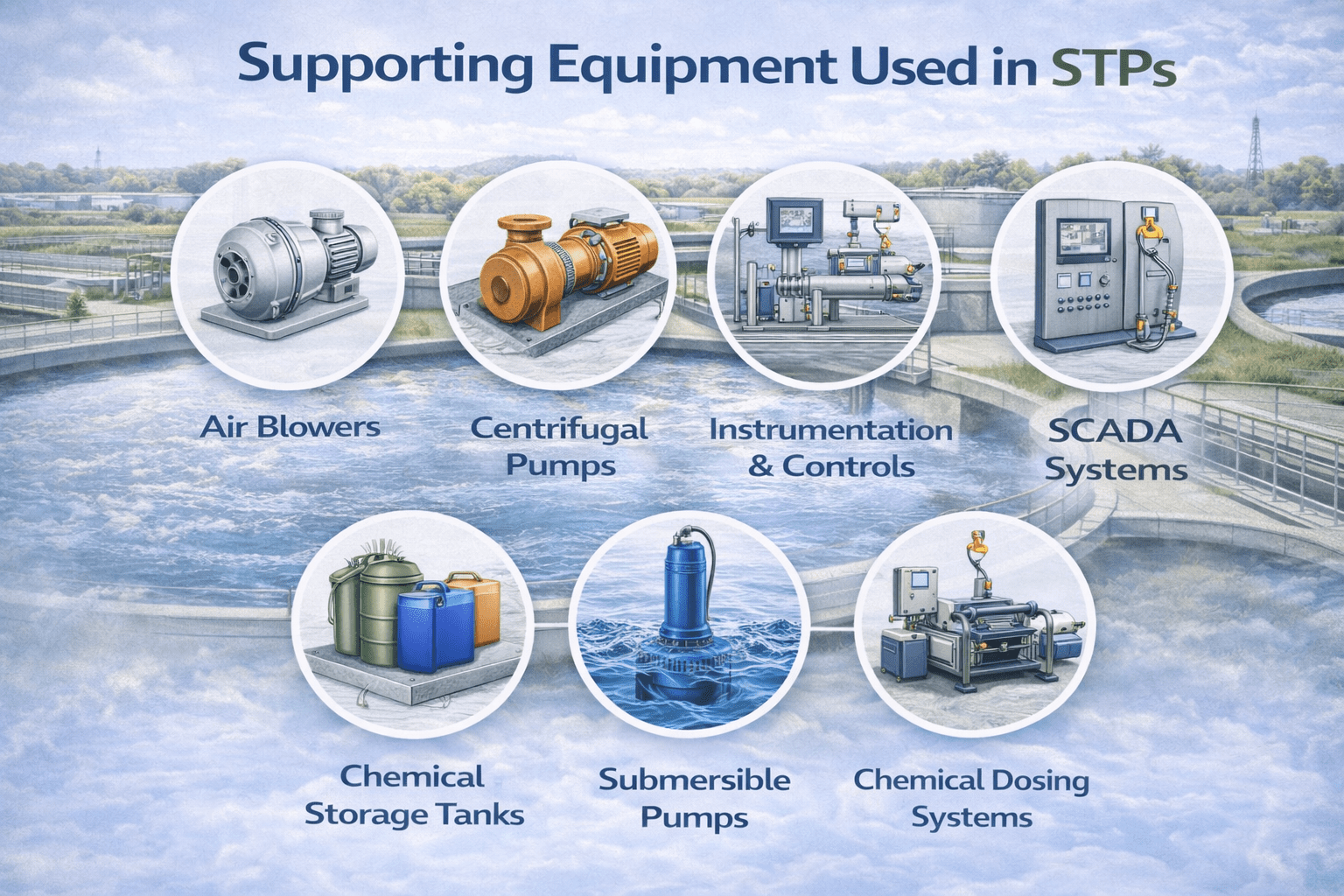
Supporting Equipment Used in STPs
There are many auxiliary devices that assist the primary treatment system to ensure system efficiency, including:
Pumps and Pumping Stations
Pumps are used throughout the wastewater treatment process to pump flow between treatment operations.
Flow Meters
Flow meters are placed at various locations to help control and monitor flow rates within the process.
Valves and Pipelines
Additionally, valves and pipelines regulate the direction and flow of wastewater through the system.
Chemical Dosing Systems
Chemical dosing systems are used to add chemicals to control the pH, assist in coagulation, and disinfect the wastewater.
Control Panels and SCADA
Control panels and SCADA systems are used to monitor and control the operation of the plant.
The majority of the above supporting devices are essential for an efficient and reliable wastewater treatment facility.
Automation and Monitoring Systems in Modern STPs
Automating and Monitoring Your STP
Many of today’s STPs are becoming automated in order to enhance their overall performance while minimizing operator overload.
SCADA Based Monitoring
With SCADA, plant processes can be monitored and controlled in real time.
Sensor Based Control Systems
The utilization of sensor based control systems allows operators to measure parameters such as pH, dissolved oxygen, and turbidity levels.
Remote Operation Capabilities
Operators may also operate and manage the plant remotely.
Benefits of Automation
Benefits associated with automation include:
– Increase in accuracy and efficiency
– Decreasing labour costs
– Early detection of failures
– More efficient use of energy resources
An automated STP is an intelligent, efficient STP.
Key Factors to Consider When Selecting STP Equipment
When considering what STP equipment to select, it is important to conduct thorough evaluations of:
Flow Rate & Plant Capacity
Flow rates should be established based on the anticipated wastewater flow to ensure that the equipment can handle the expected flow of wastewater.
Wastewater Characteristics
The type of wastewater will determine the type of equipment selected.
Energy Efficiency
Equipment utilized to treat wastewater should be energy efficient to minimize ongoing operational costs.
Maintenance Needs
Systems that require little maintenance have very little downtime
Corrosion Resistant
Required for Durability Over Time
Regulatory Compliance
Must be in compliance with current environmental regulations
When you have a proper selection process for equipment, the end result is an efficient working plant
Applications of Sewage Treatment Plants
Uses for Sewage Treatment Plants
There are many different areas that use STP’s for treating wastewater:
- Residential Areas: Treated as domestic waste and reused
- Commercial Buildings: Helps maintain public health and environmentally sustainable business practices
- Municipal Wastewater Facilities: Provides sewage treatment on a larger scale
- Hotels/Hospitals: Due to the high volume of wastewater produced and sanitary requirements.
- Industries: Treatment of waste water before it is discharged to the sewer system.
Sewage treatment plants play a critical role in the functionality of modern infrastructure.
Why Proper STP Equipment Selection Improves Plant Efficiency
Choosing the correct equipment for your STP will have an immediate impact on overall efficiency for that plant:
Improved Treatment Efficiency – Remove the greatest amount of contaminants
Lower Operating Costs – By installing energy-efficient systems, you can reduce your monthly expenses
Increased Equipment Longevity – Equipment constructed from quality materials last longer therefore reducing replacement costs
Dependable Regulatory Compliance – Equipment consistently meets or exceeds discharge standards
To put it simply, if you select the right equipment for your sewage treatment plant, you will improve both its efficiency and sustainability.
How Adroit Provides Reliable Equipment for Sewage Treatment Plants
Adroit is a trusted source for innovative solutions to sewage treatment because:
- Providing Custom Manufactured Wastewater Treatment Equipment – Built specifically to the needs of the job at hand
- Using Corrosion Resisting Materials – Will provide for a longer overall service life
- Building Energy-Efficient Treatment Equipment – Can dramatically reduce operating costs
- Expertise in Engineering – Has extensive training and experience in wastewater treatment and sewage treatment.
Frequently Asked Questions (FAQs)
What is the head piece of equipment in a sewage treatment plant?
There is not a single head piece of equipment at a sewage treatment plant; however, aeration systems are essential for carrying out biological treatment. Without proper aeration, the microorganisms do not effectively digest organic materials resulting in decreased efficiency of the entire treatment process.
How many stages exist in the STP process?
Typically an STP contains five major treatment stages: pretreatment, primary treatment, secondary treatment, tertiary treatment, and sludge treatment. Each treatment stage has particular functions that remove a variety of contaminants from the incoming wastewater.
What type of equipment is used for sludge treatment at STPs?
The equipment used for sludge treatment at STP’s consists of sludge thickeners, dewatering equipment, filter presses, drying beds, and sludge pumps. The purpose of these various types of devices is to reduce the volume of sludge and provide a safe and economical means for disposing of it.
What is the function of aeration equipment within sewage treatment?
Aeration equipment provides the oxygen needed by microorganisms during the biological treatment stage of sewage treatment. The presence of this oxygen allows the bacteria to break down organic pollutants and will improve the quality of water and the efficiency of the treatment process dramatically.
In what way do mechanical screens prevent damage to STP equipment?
Mechanical screens are the first piece of equipment to capture large debris such as plastics and rags; therefore, the function of the mechanical screen is to prevent the large debris from clogging, damaging, or causing excessive wear and tear on downstream equipment, allowing continued flow and reducing the need for equipment maintenance.
What needs to be maintained for the STP equipment?
Routine maintenance involves conducting cleanings of the screens, checking pumps, inspecting aeration, calibrating sensors, and servicing all mechanical items… Preventative maintenance will ensure that there are no interruptions in performance and will maximize lifespan on the equipment.
Can the equipment be automated within the STP?
Yes, the contemporary STP equipment has the ability to be fully automated via SCADA and sensors. Automation provides the ability to monitor performance in real time, operate remotely, and is much more effective than manual intervention / investment in human resources, as it reduces errors and low functioning conditions.